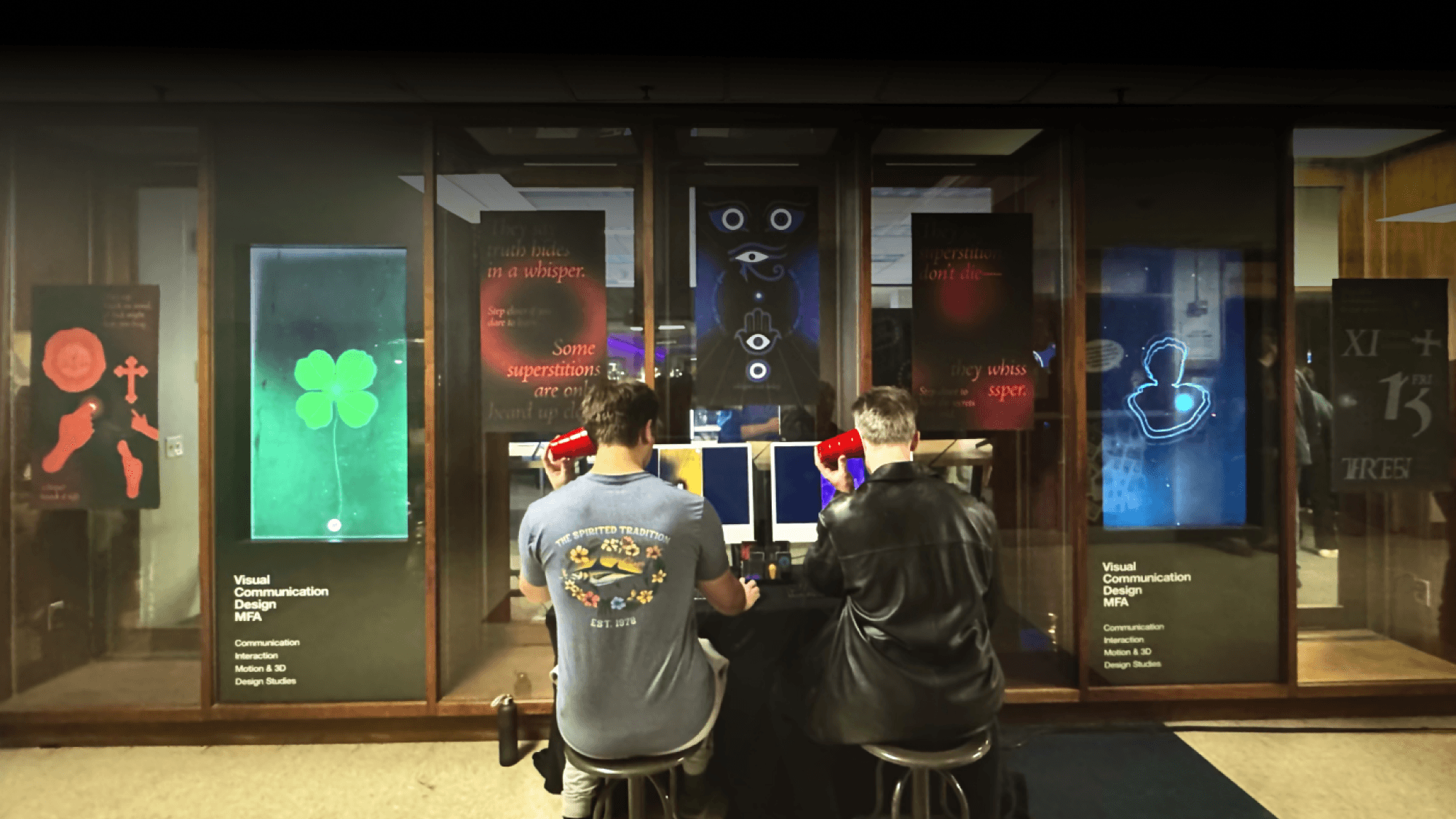
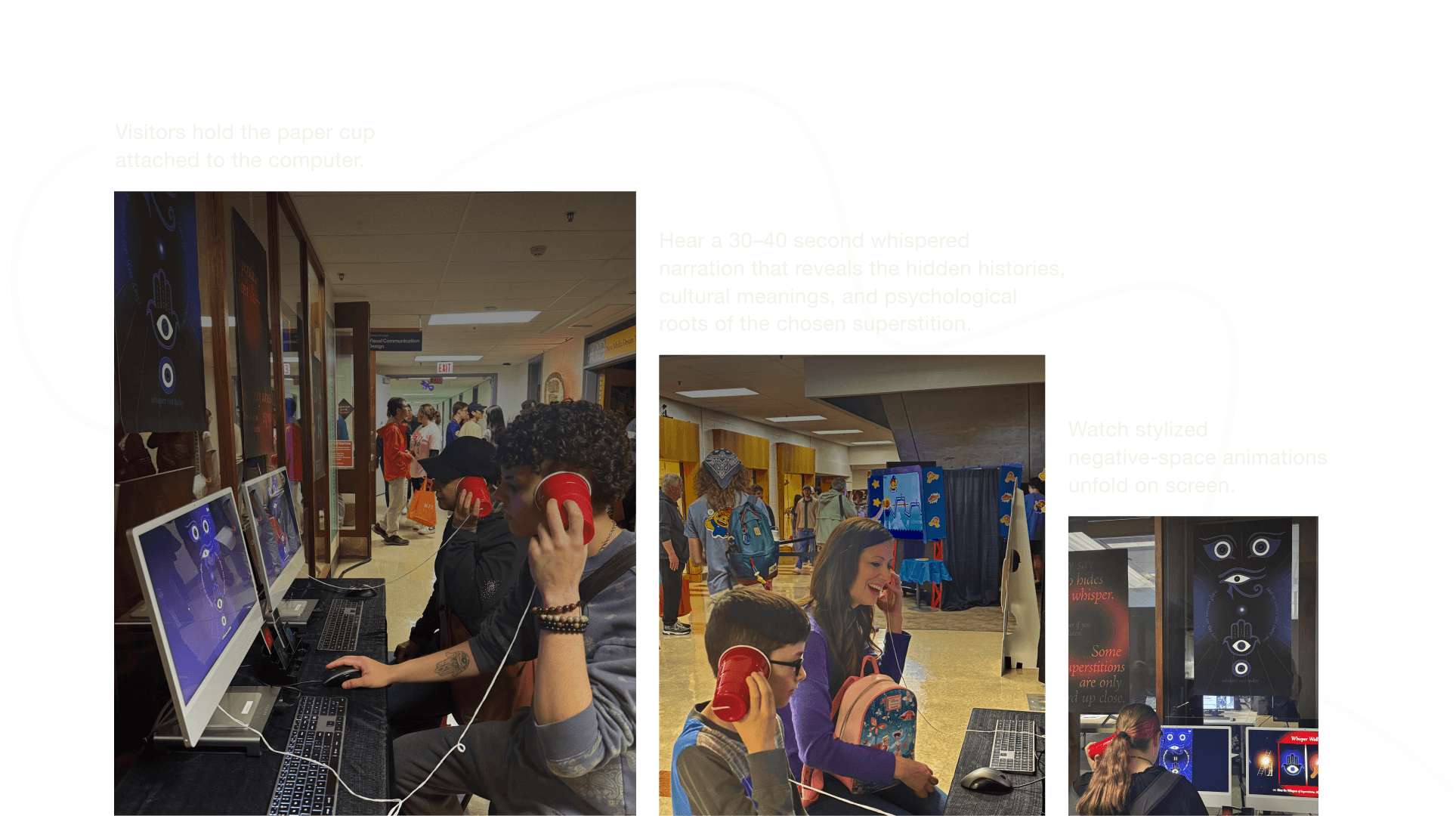
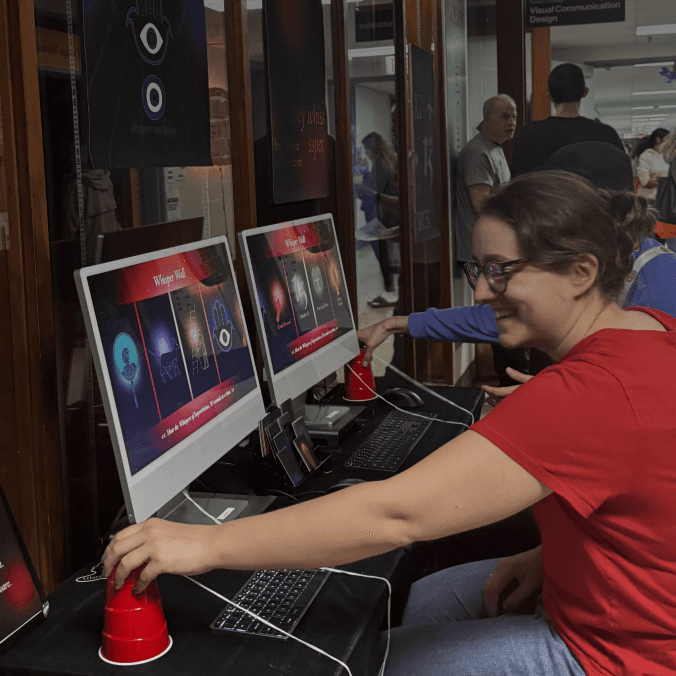
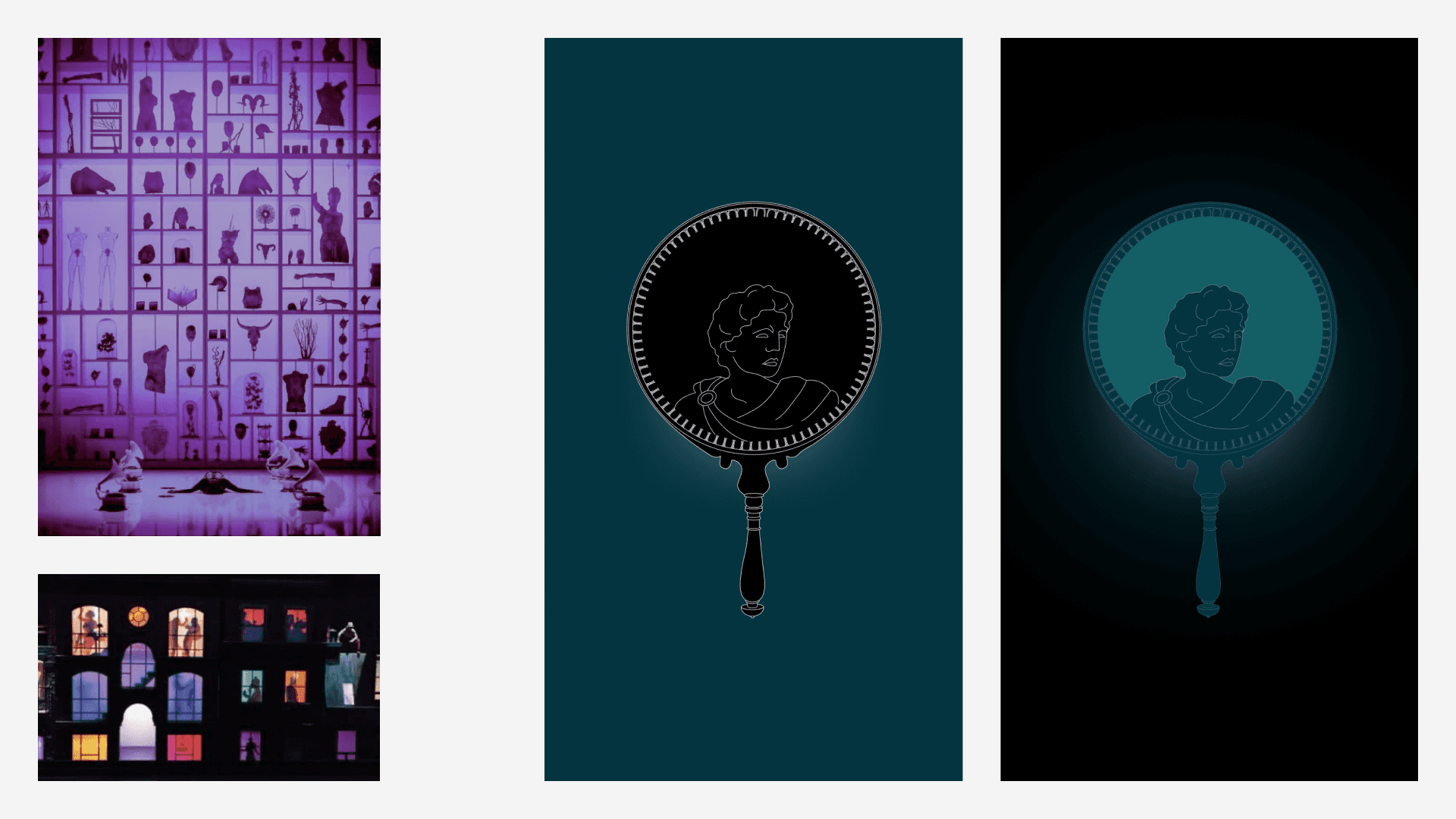
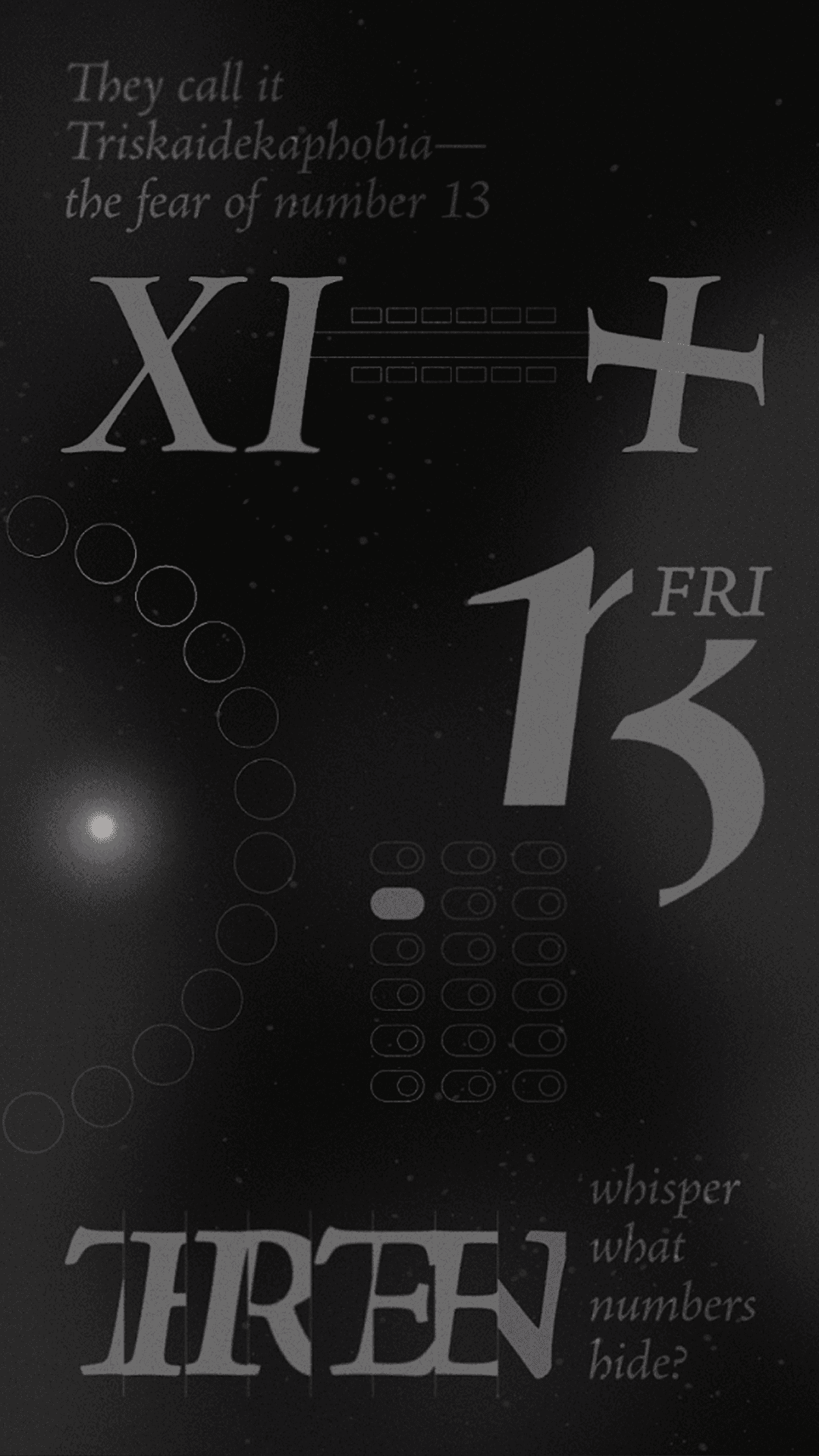
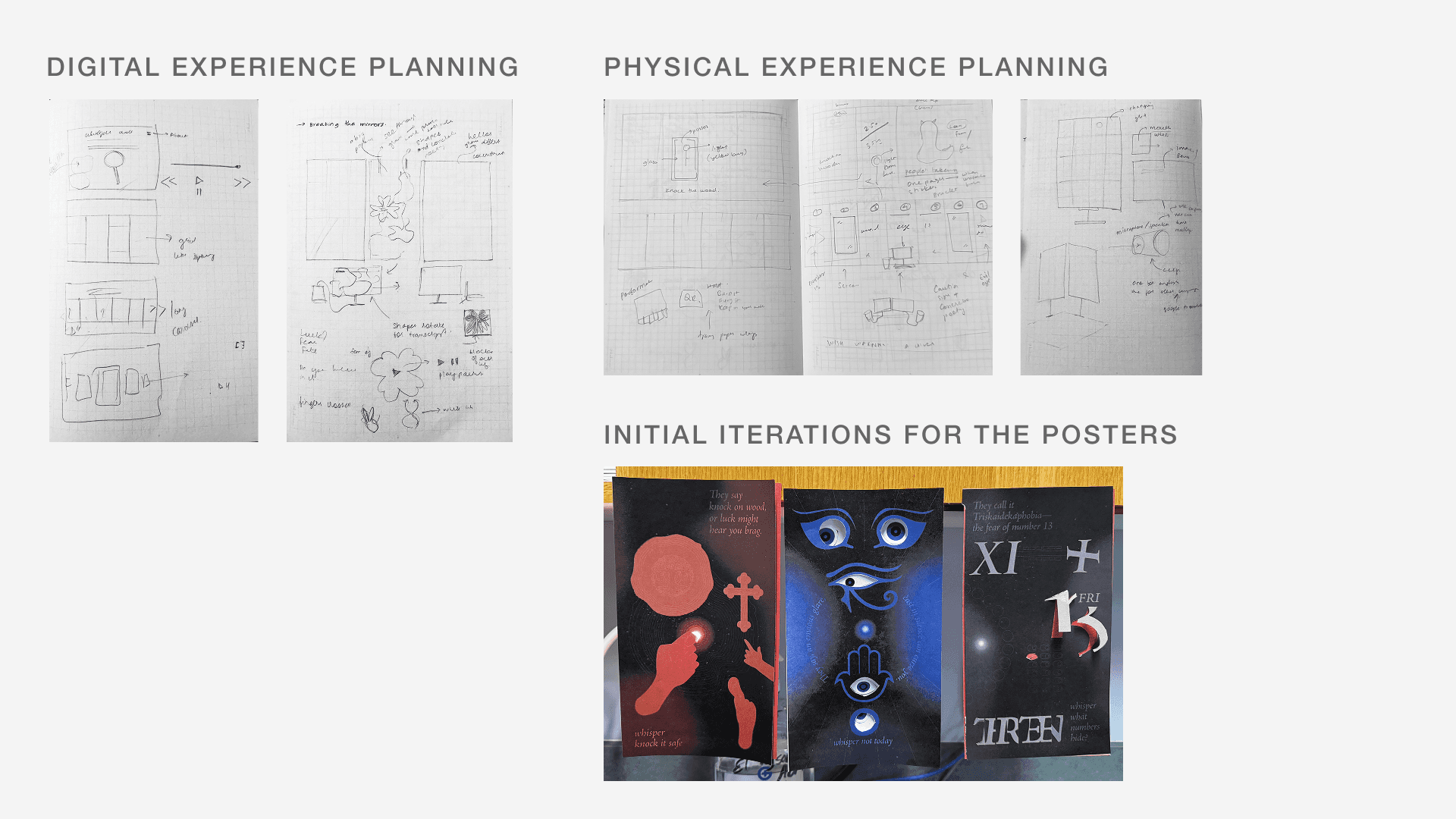
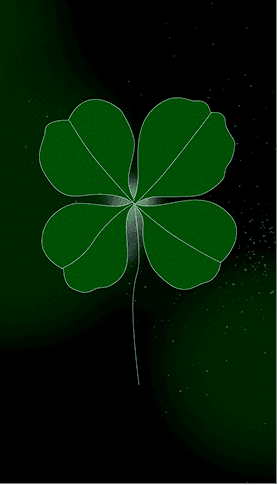
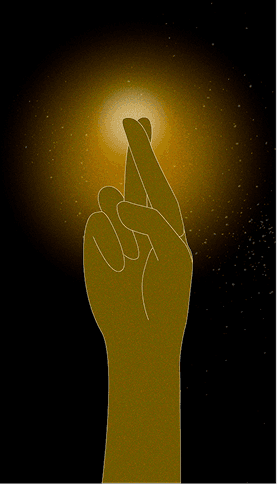
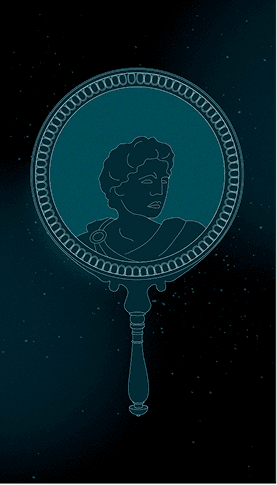
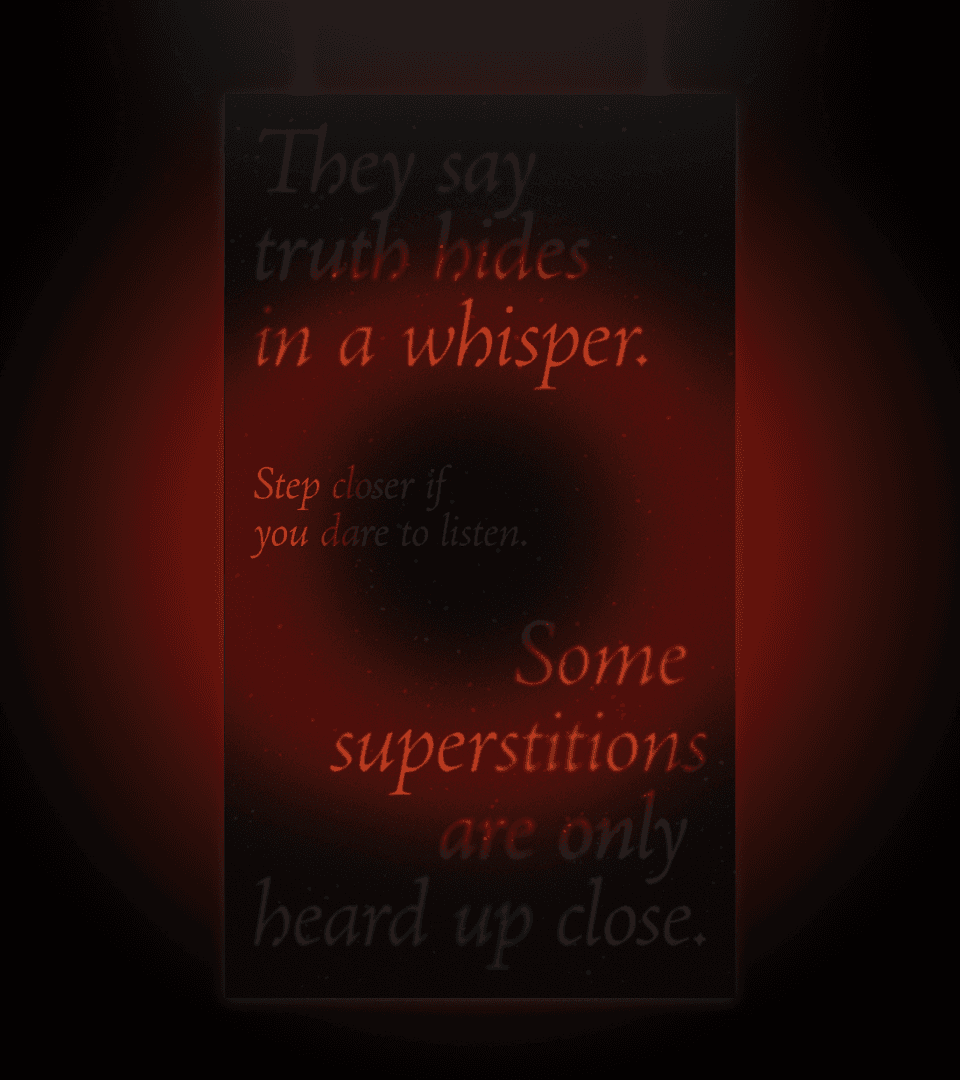
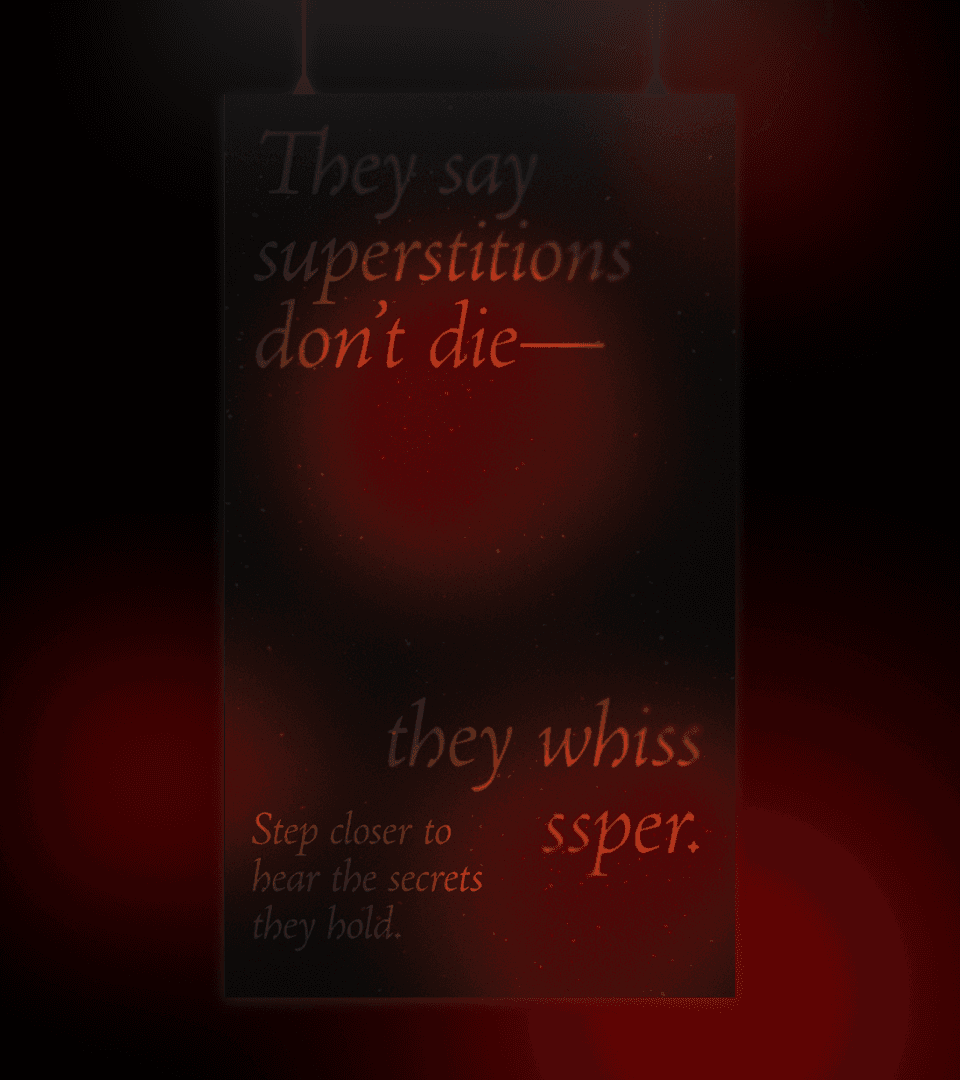
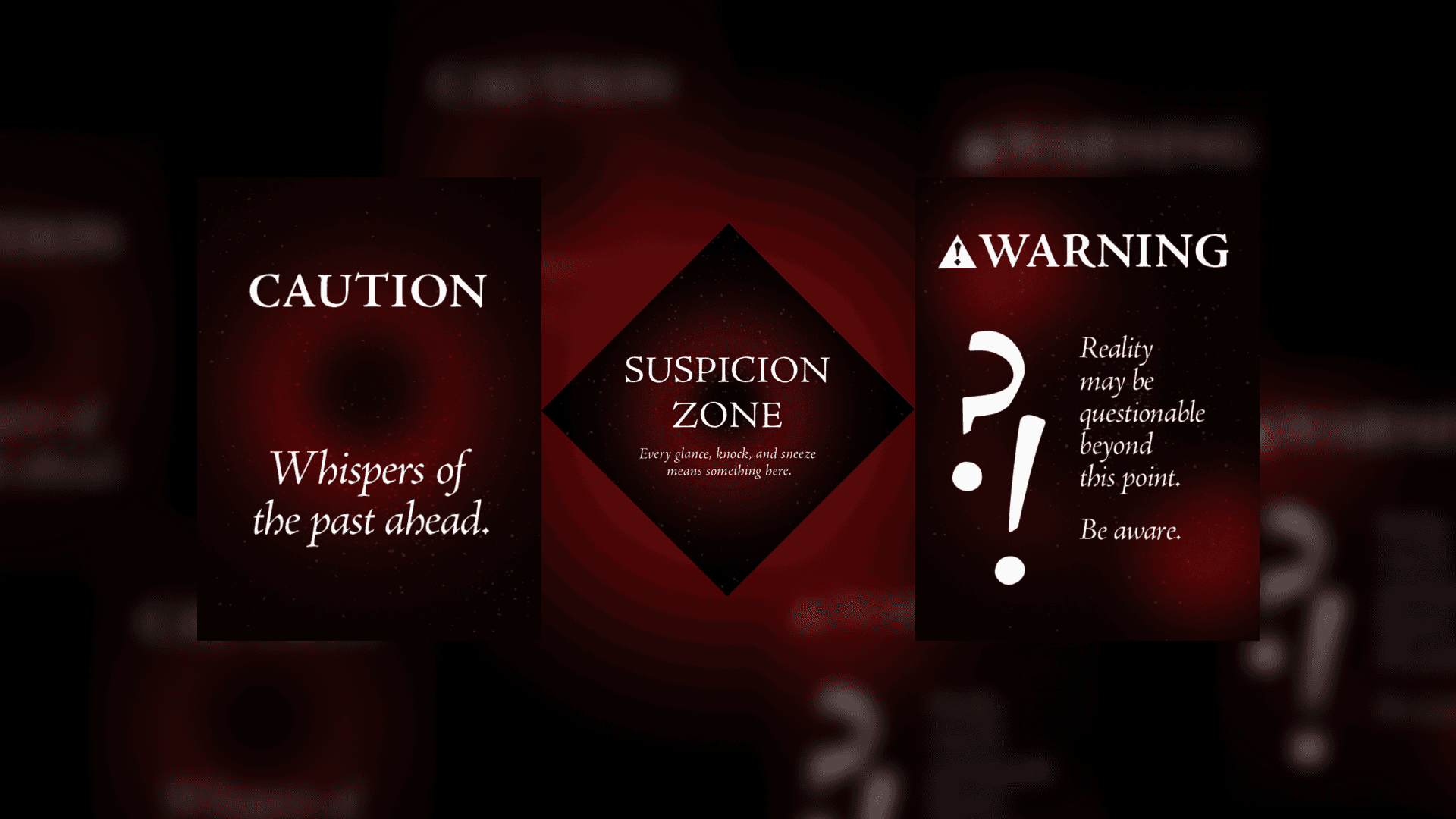
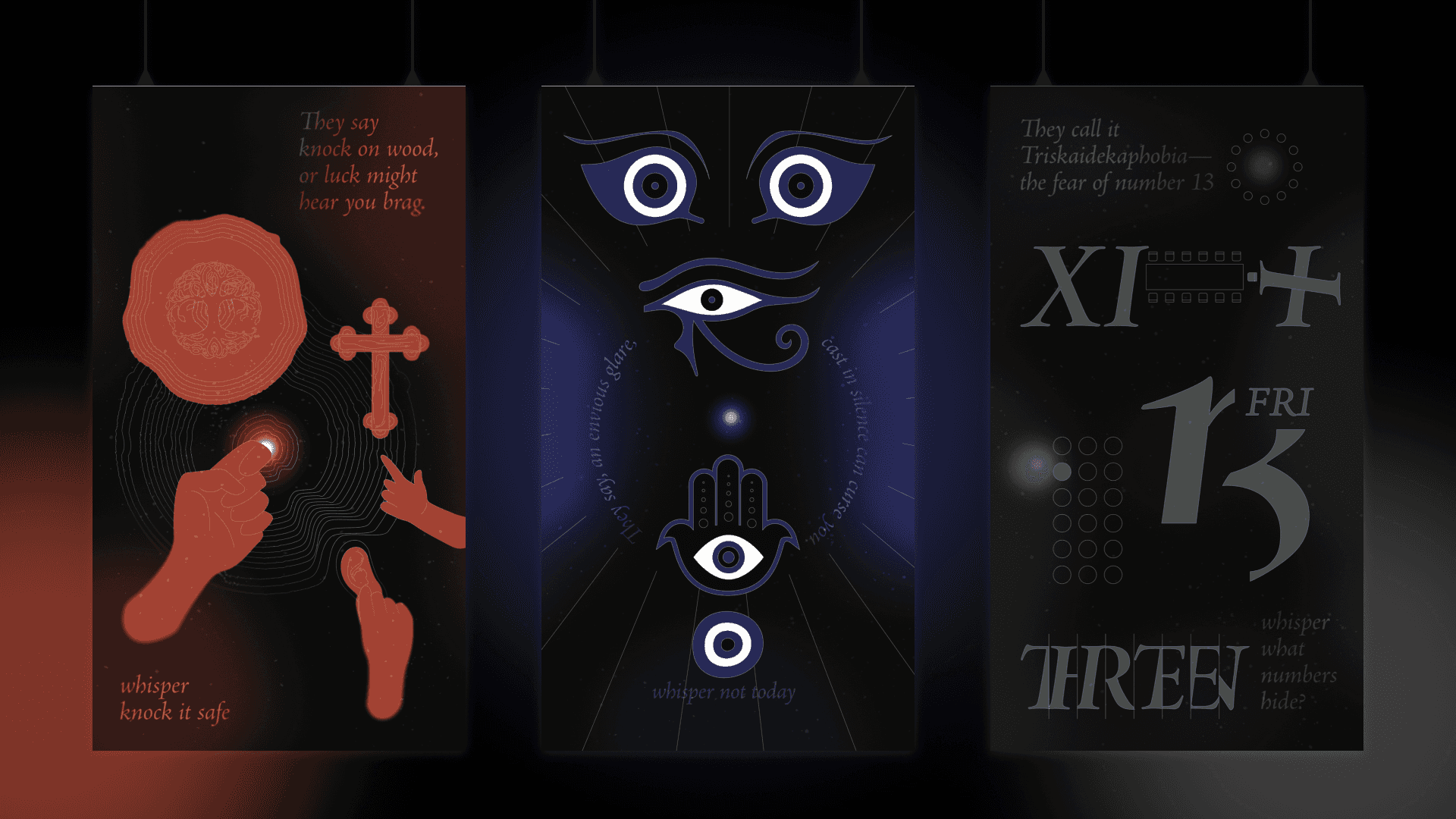
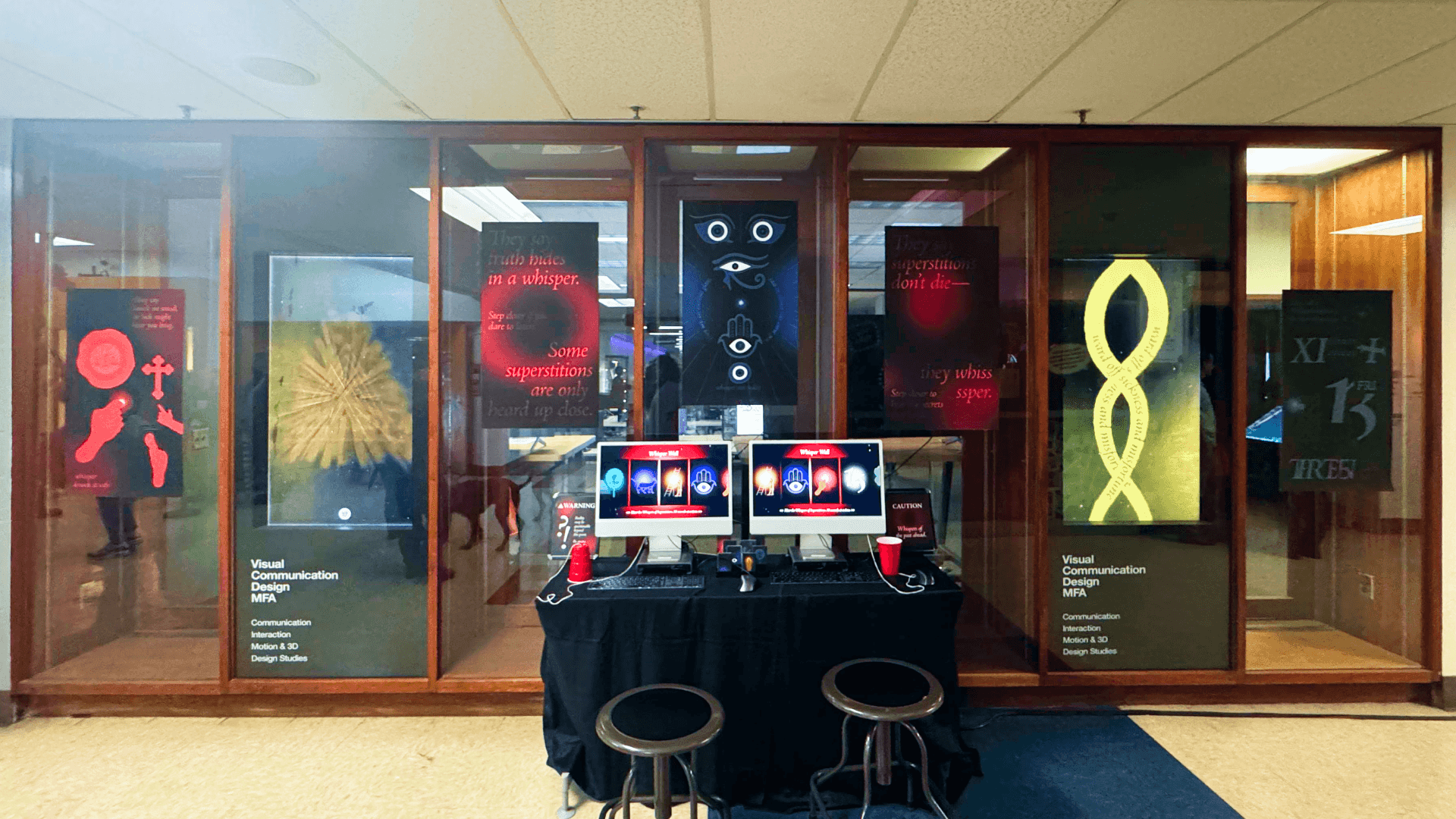
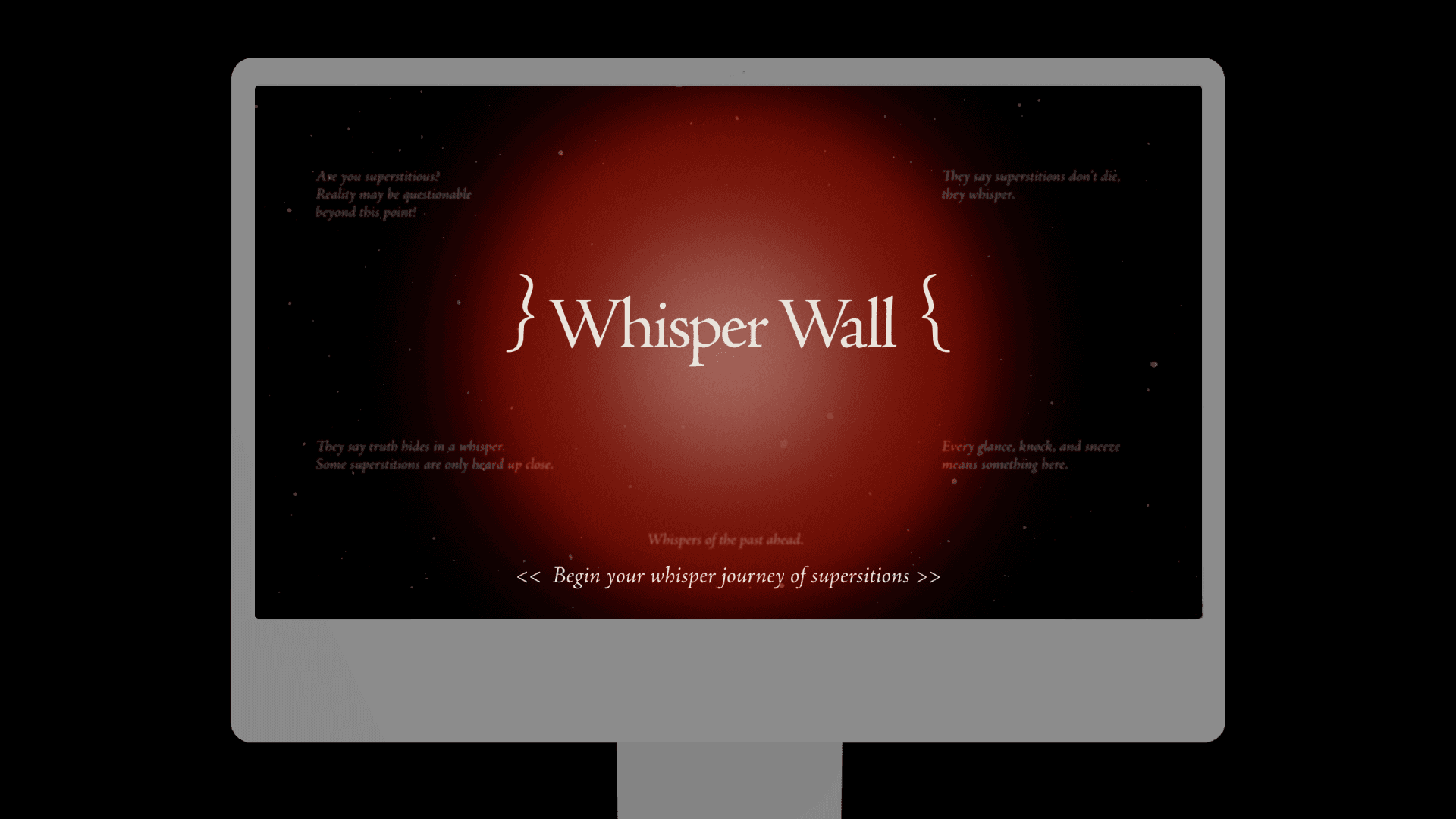
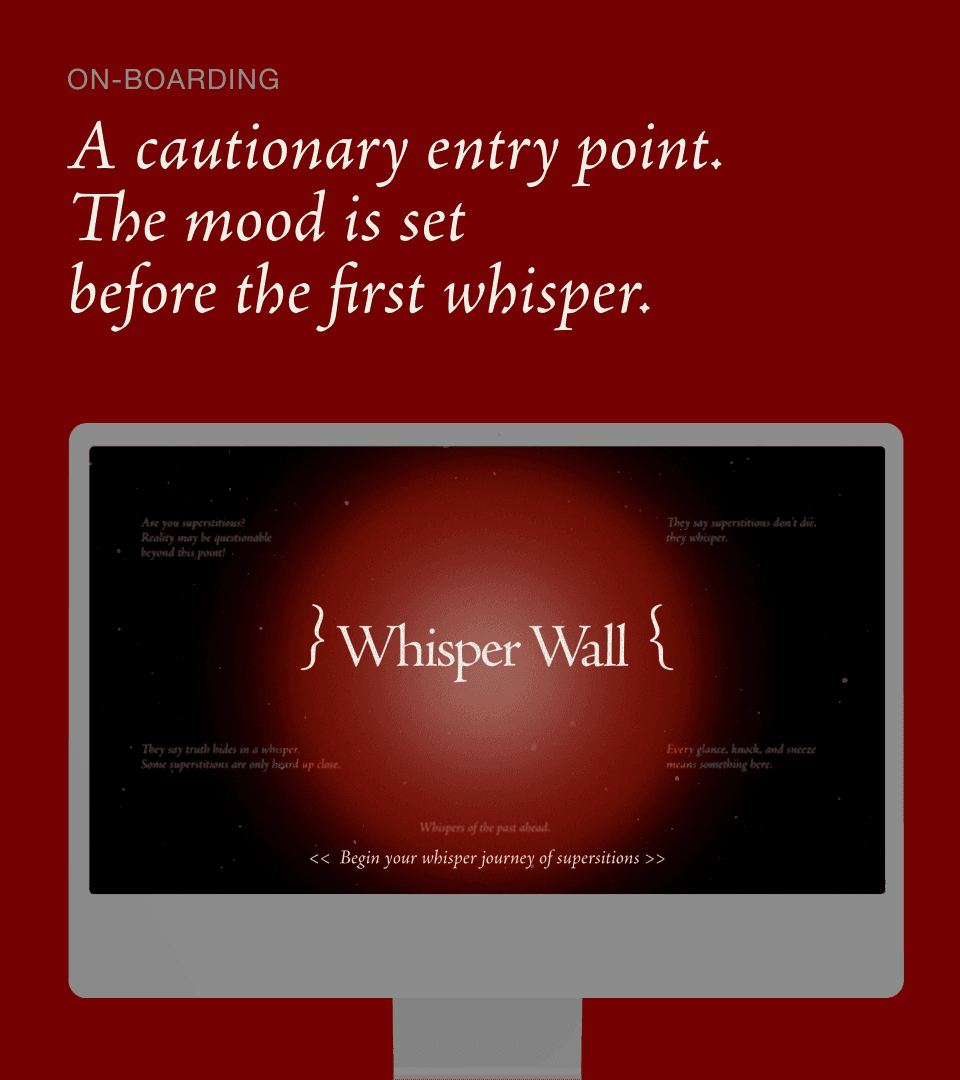
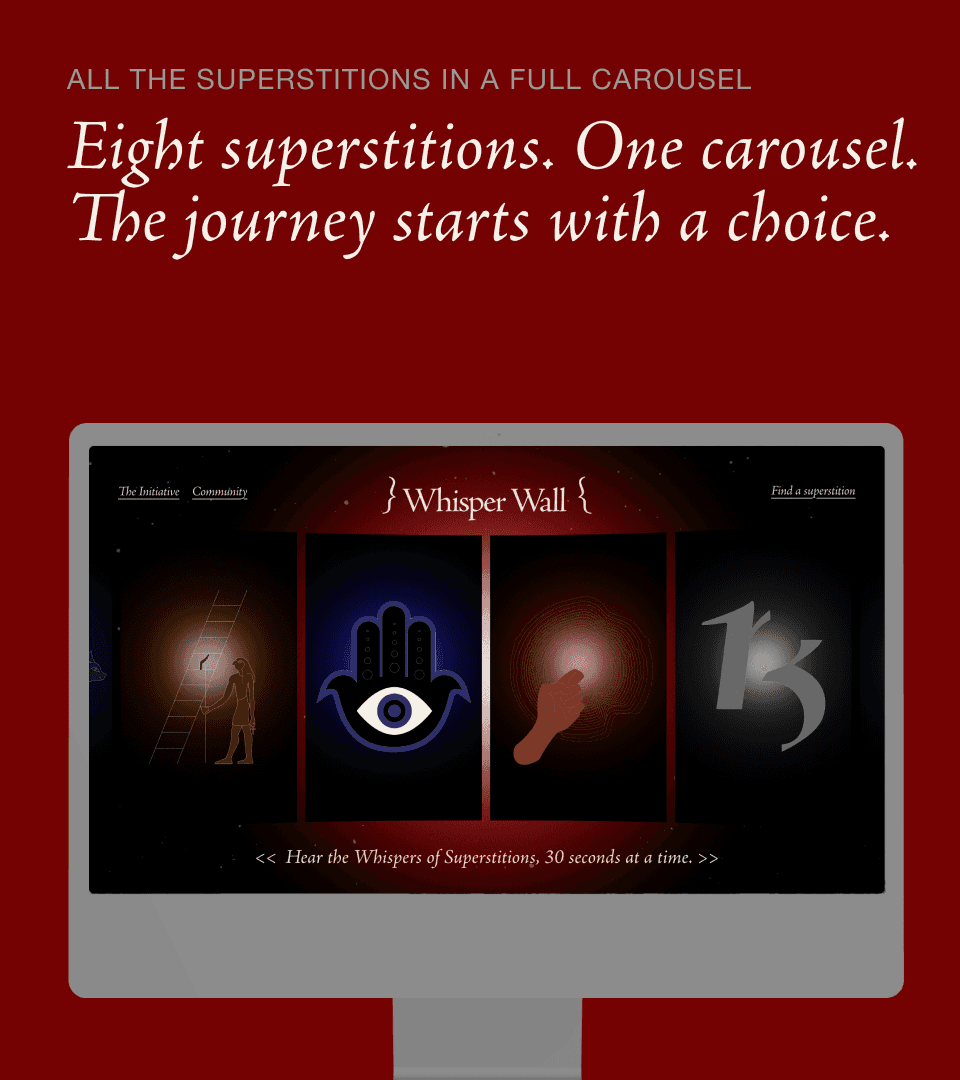
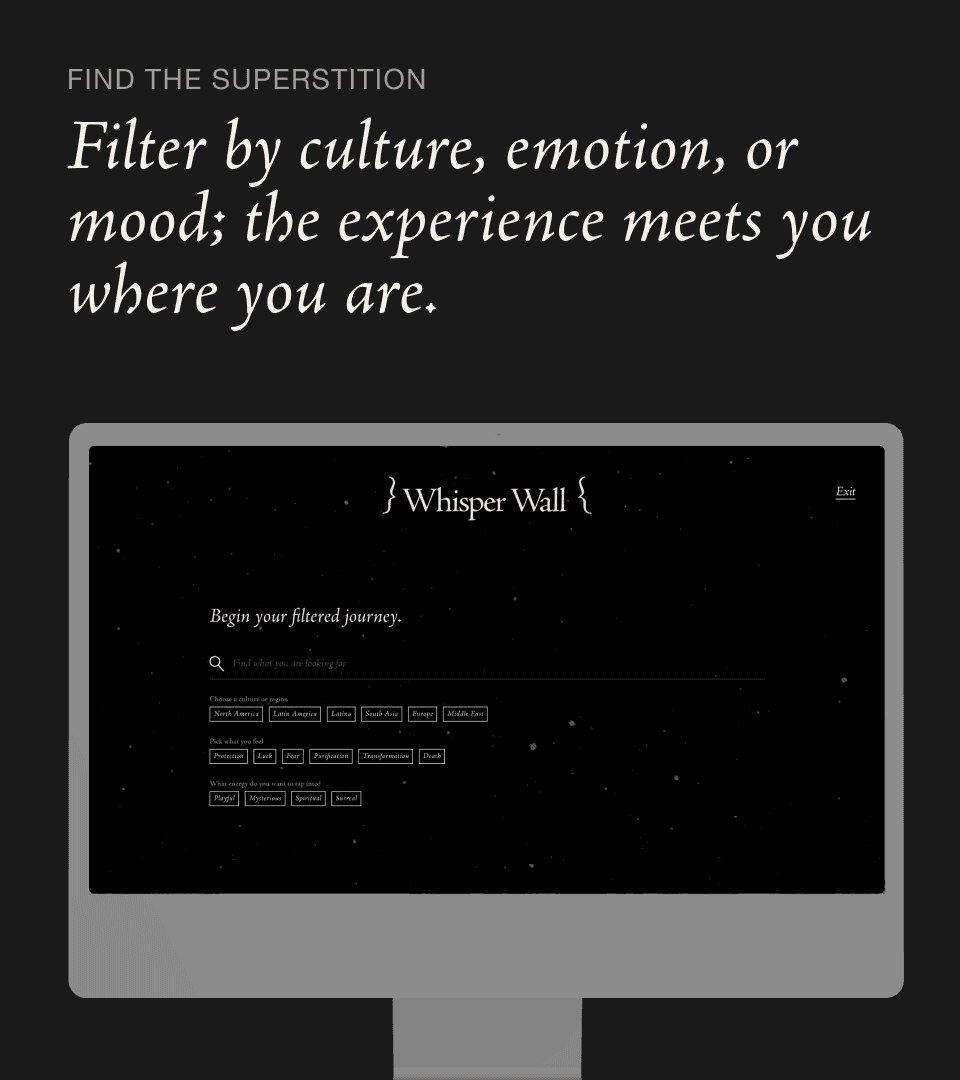
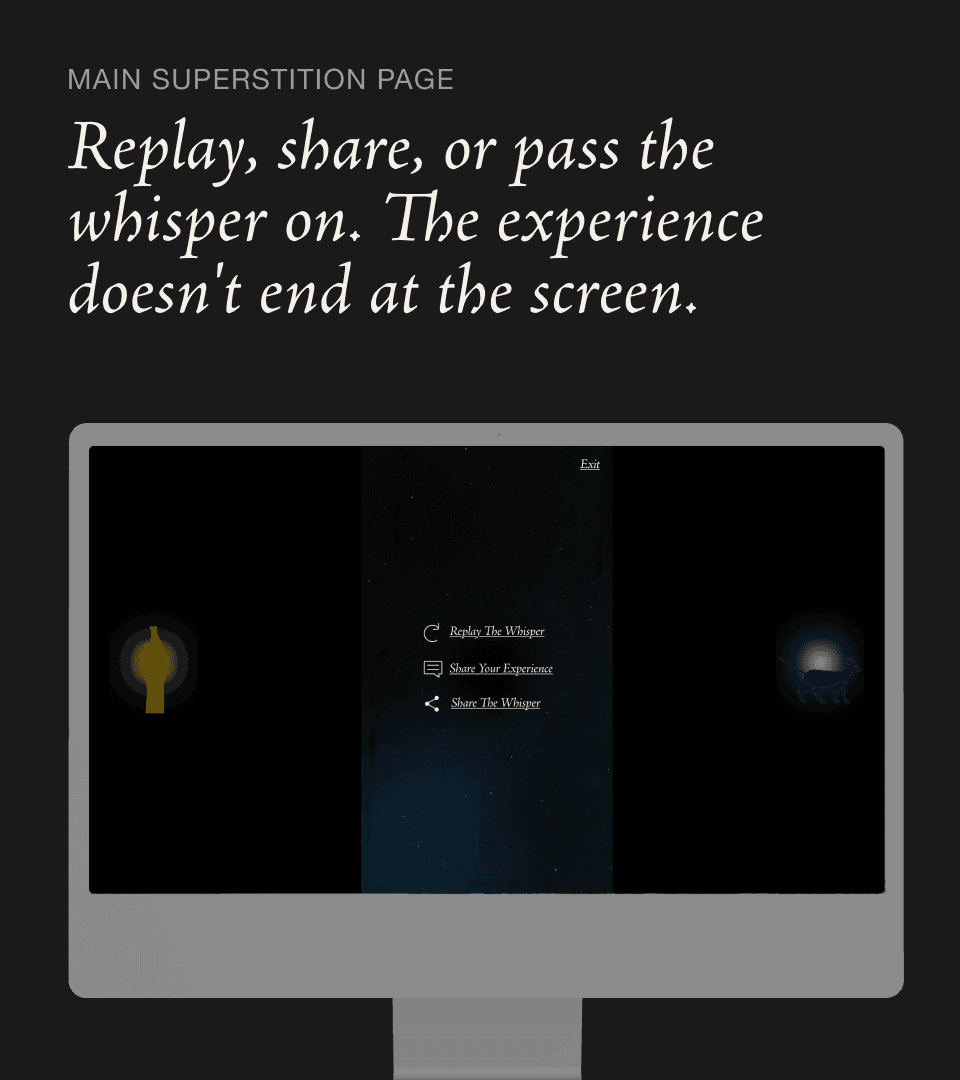
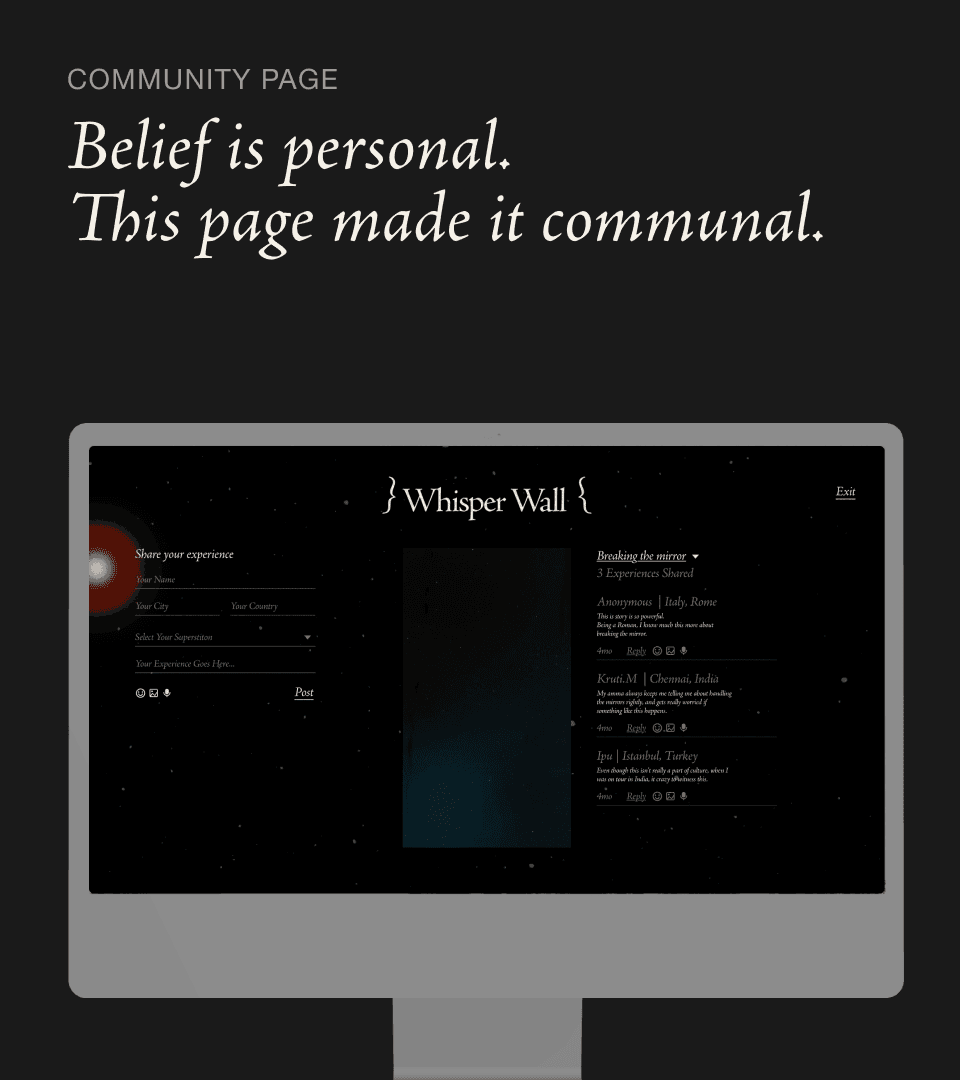
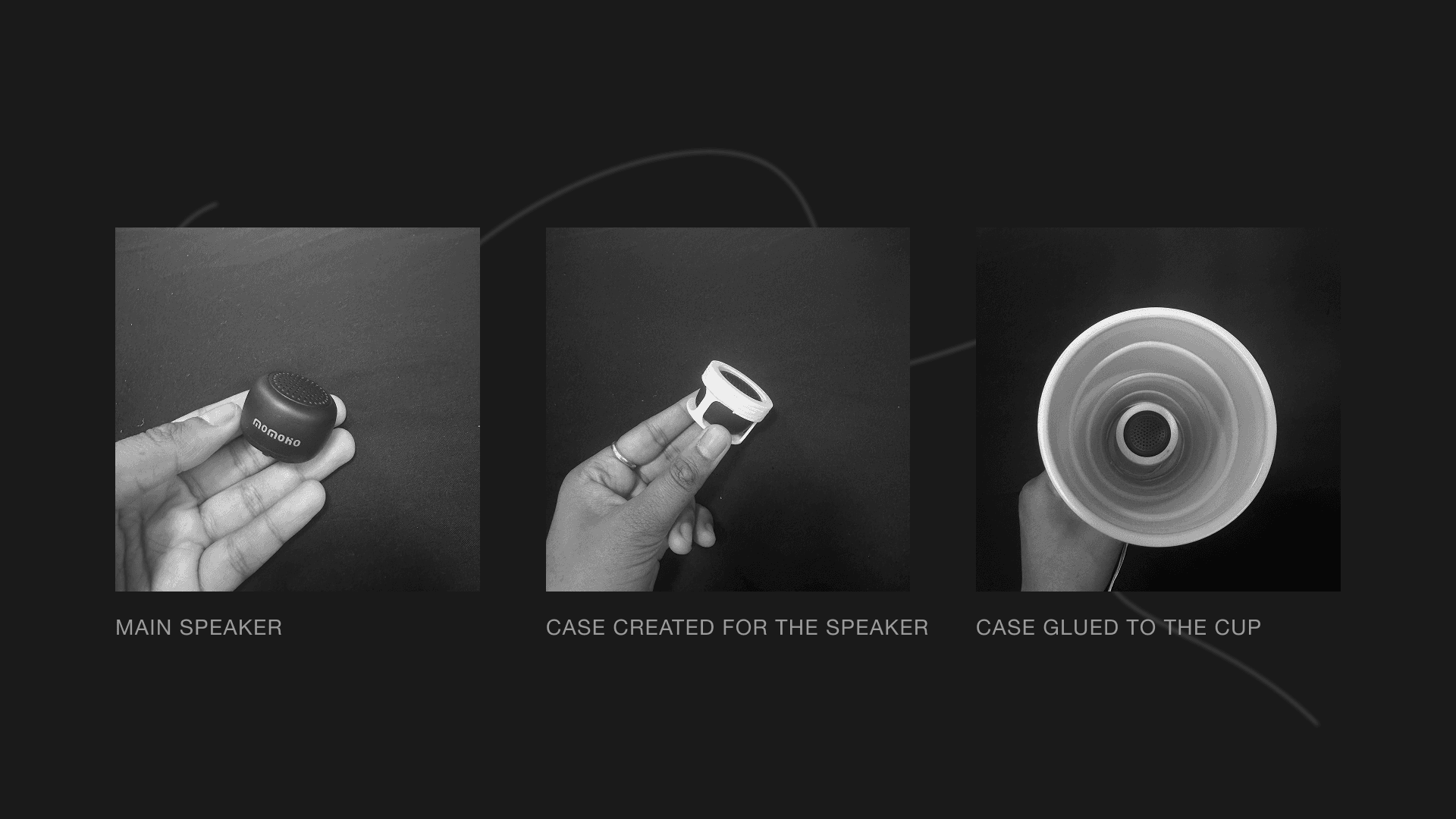
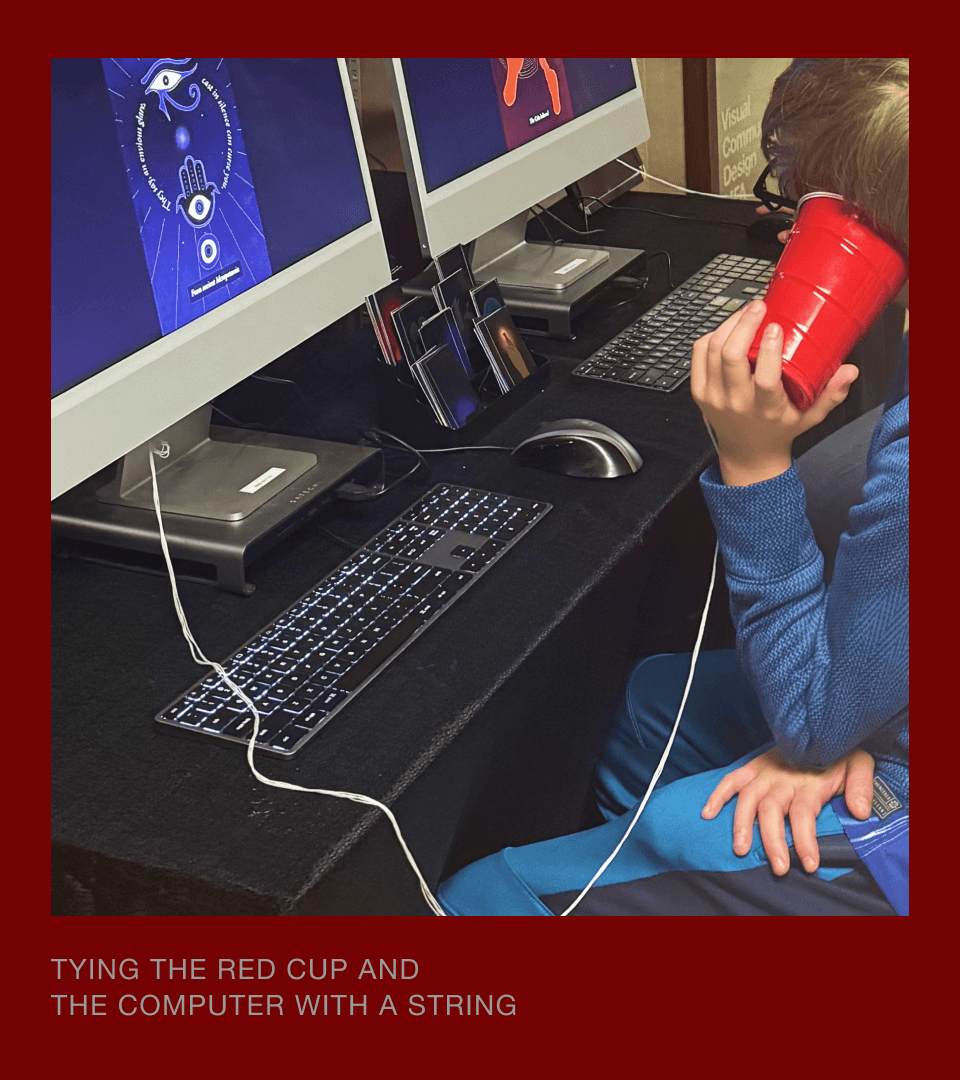
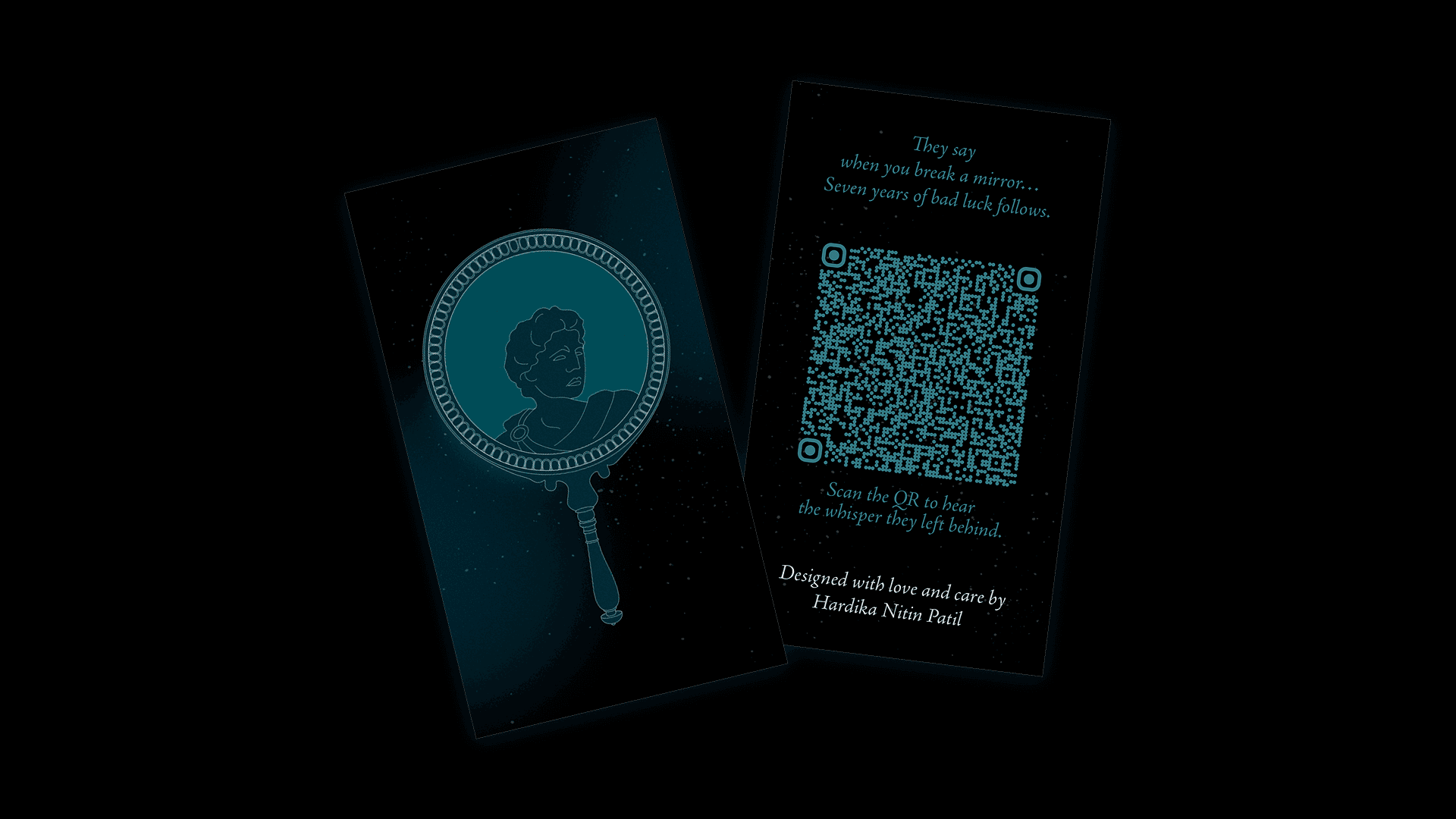
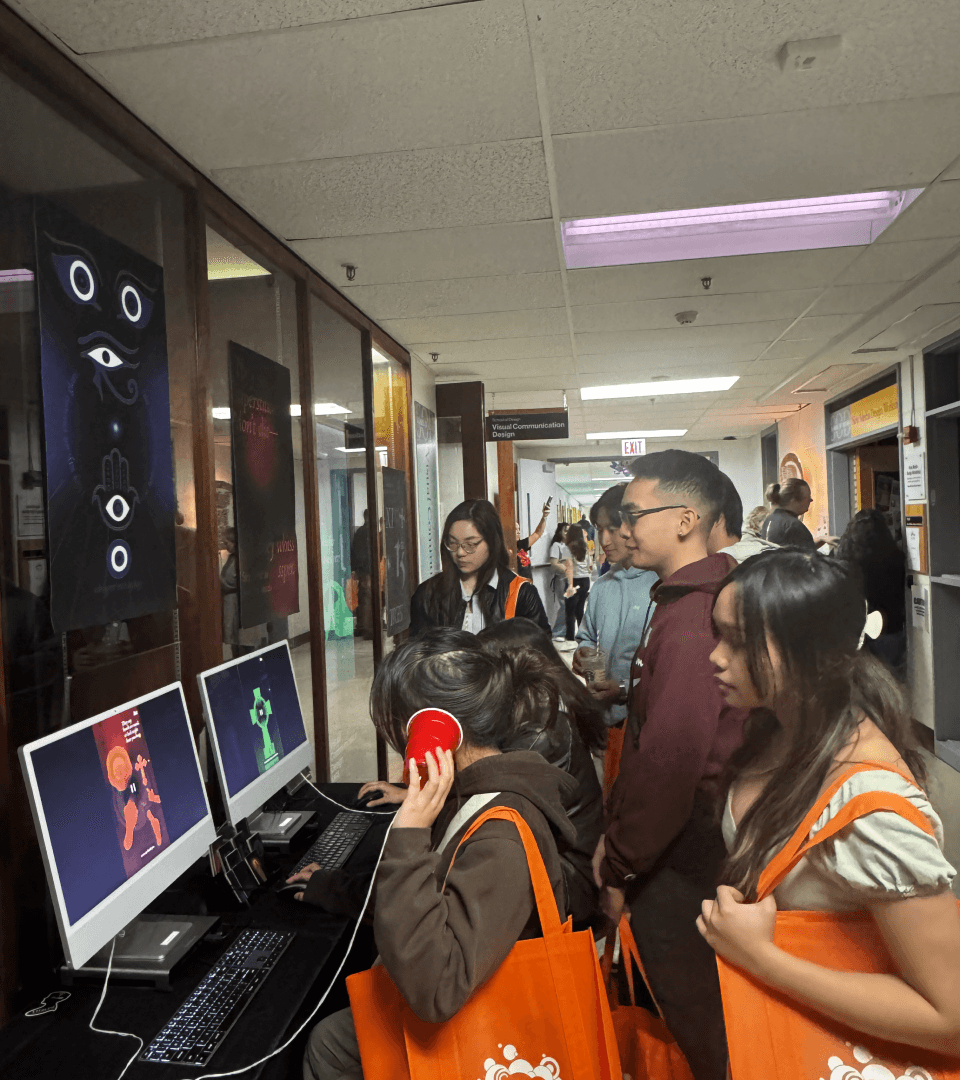
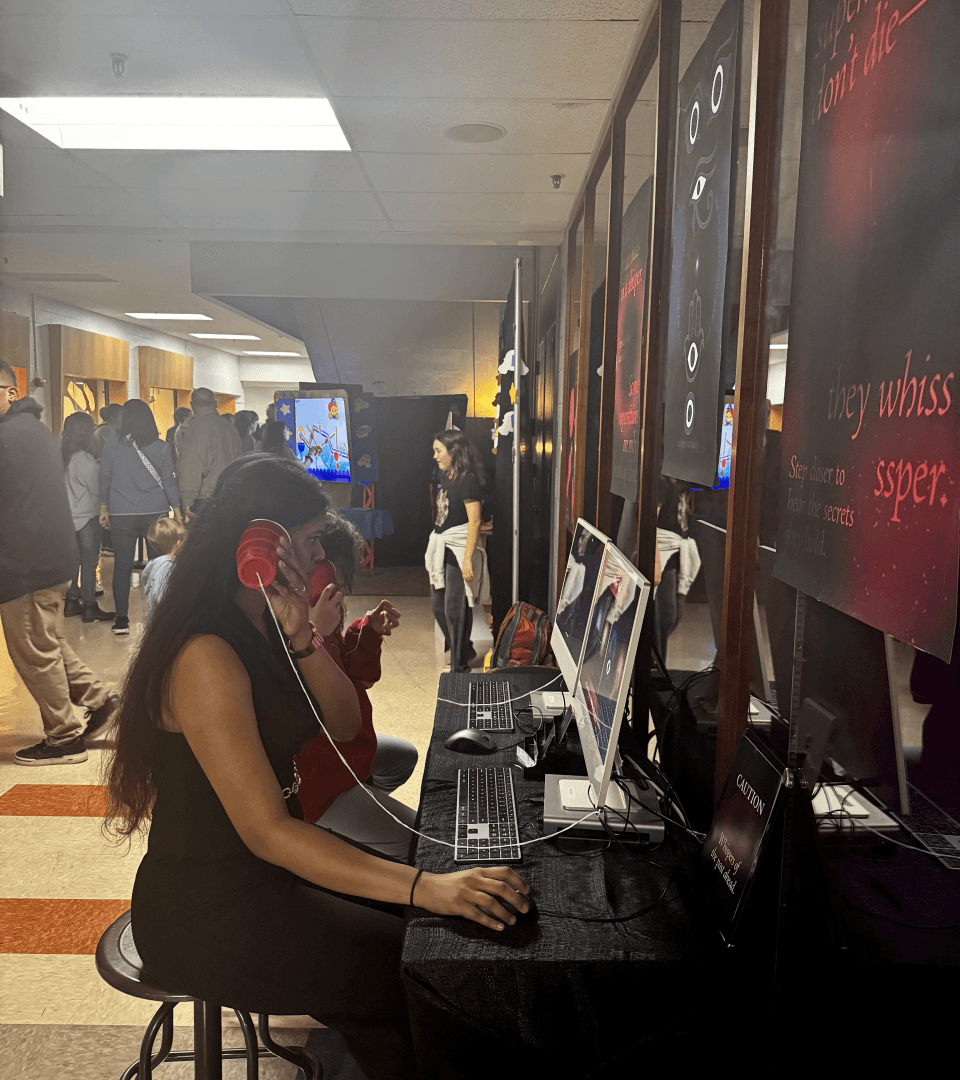
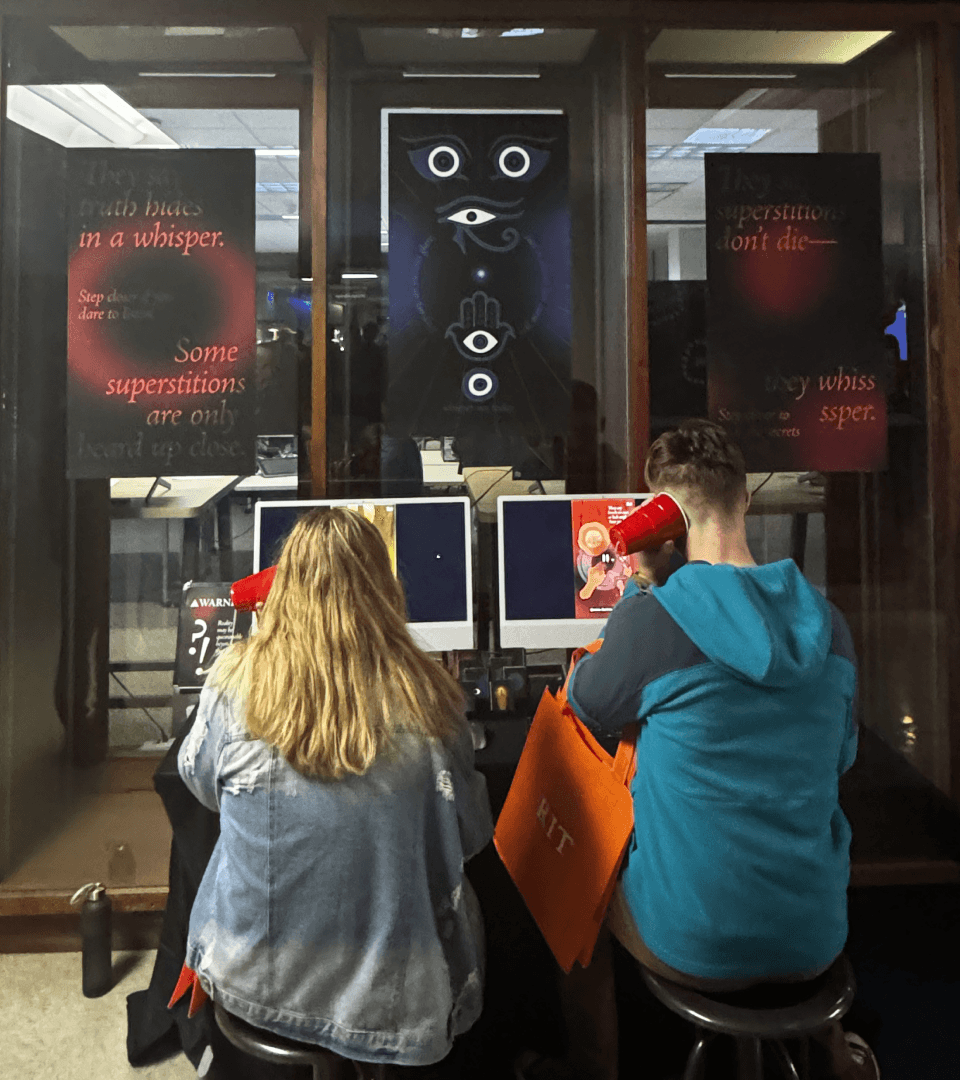
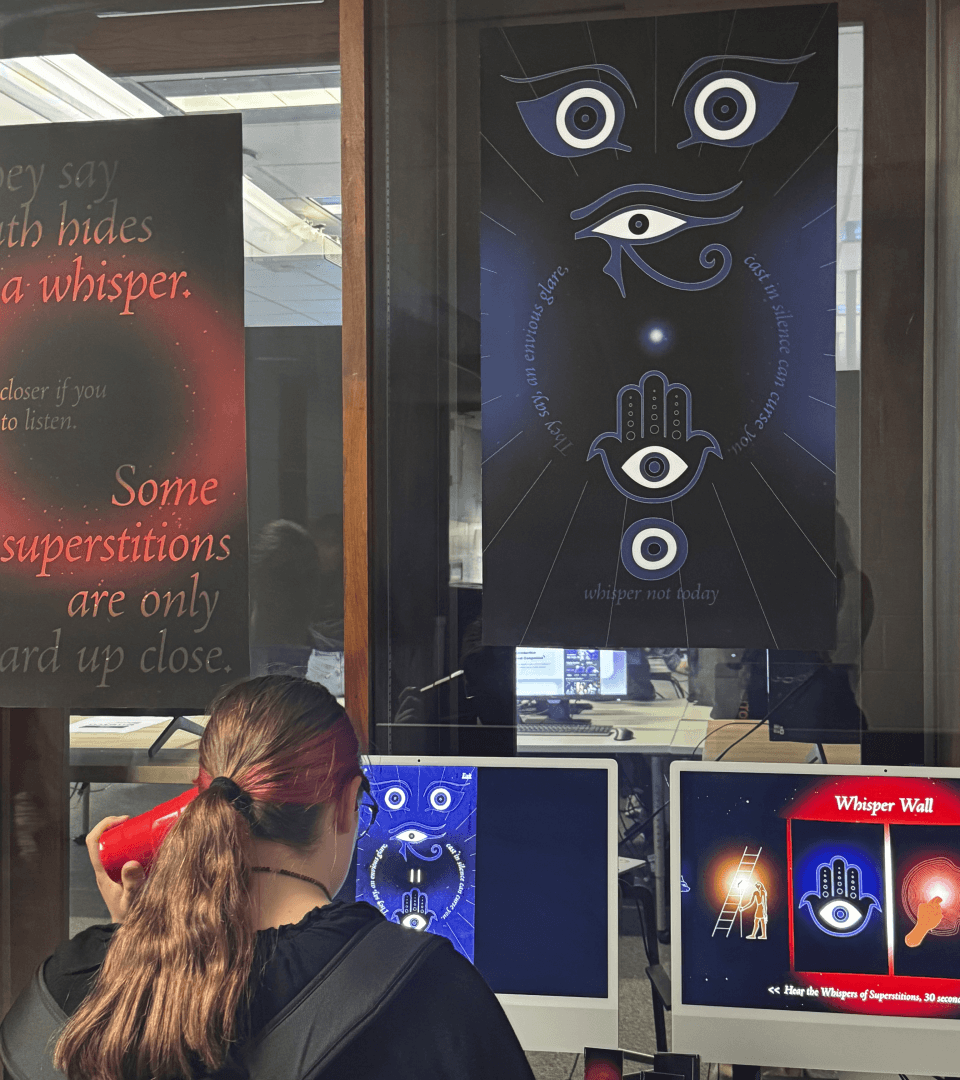
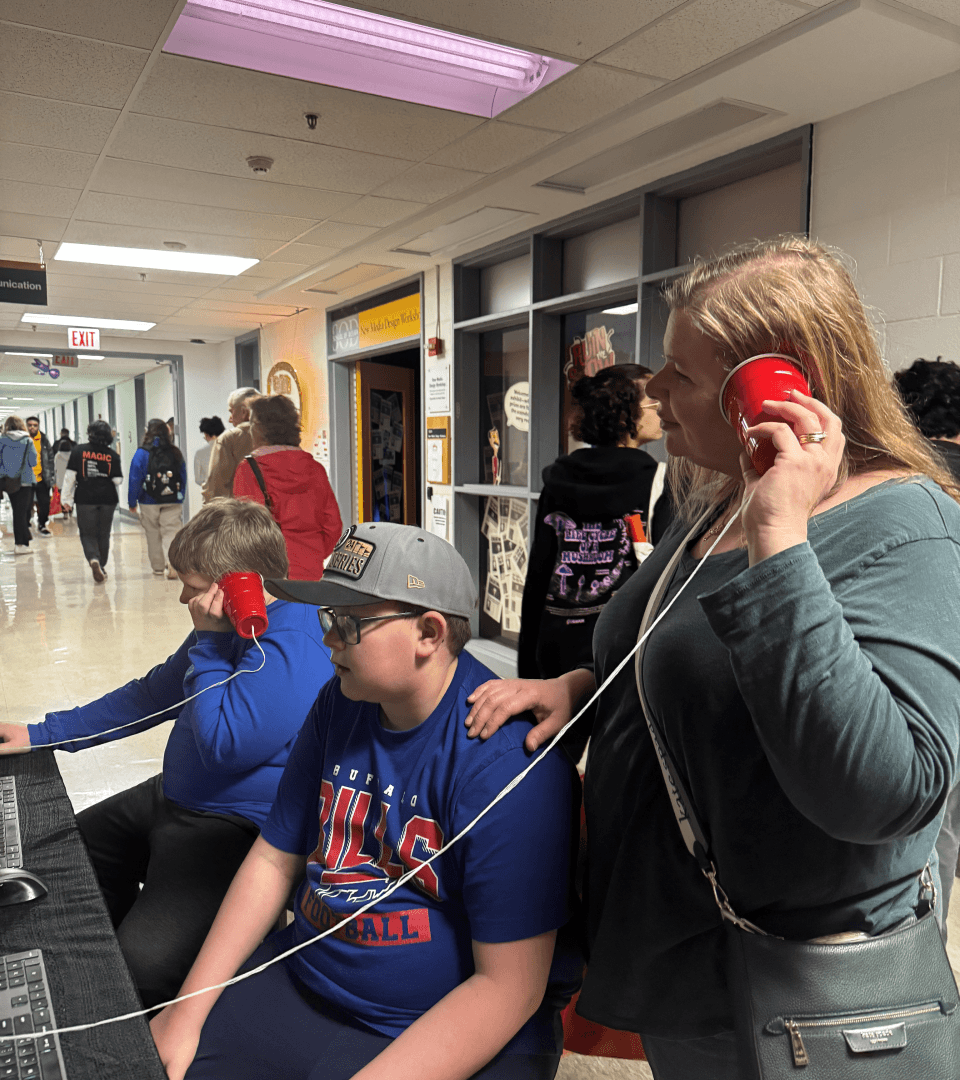
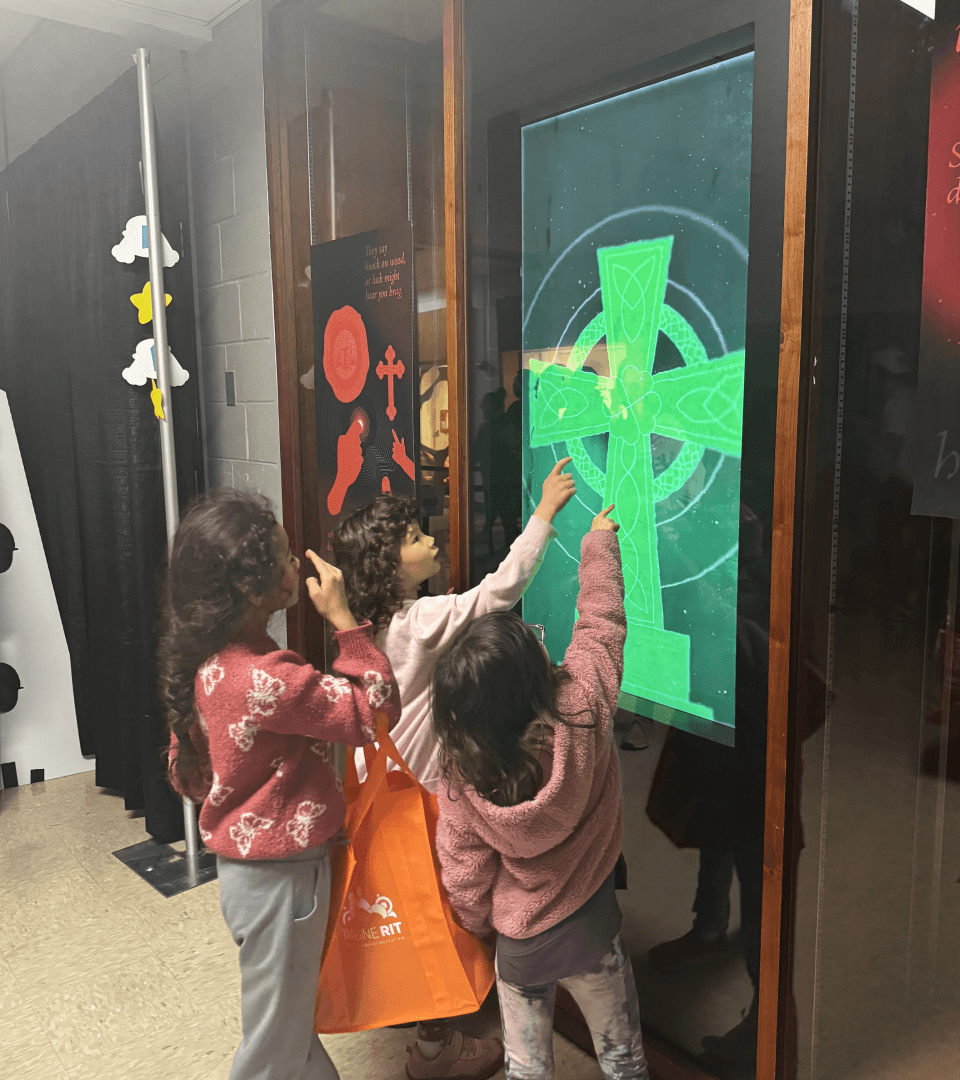
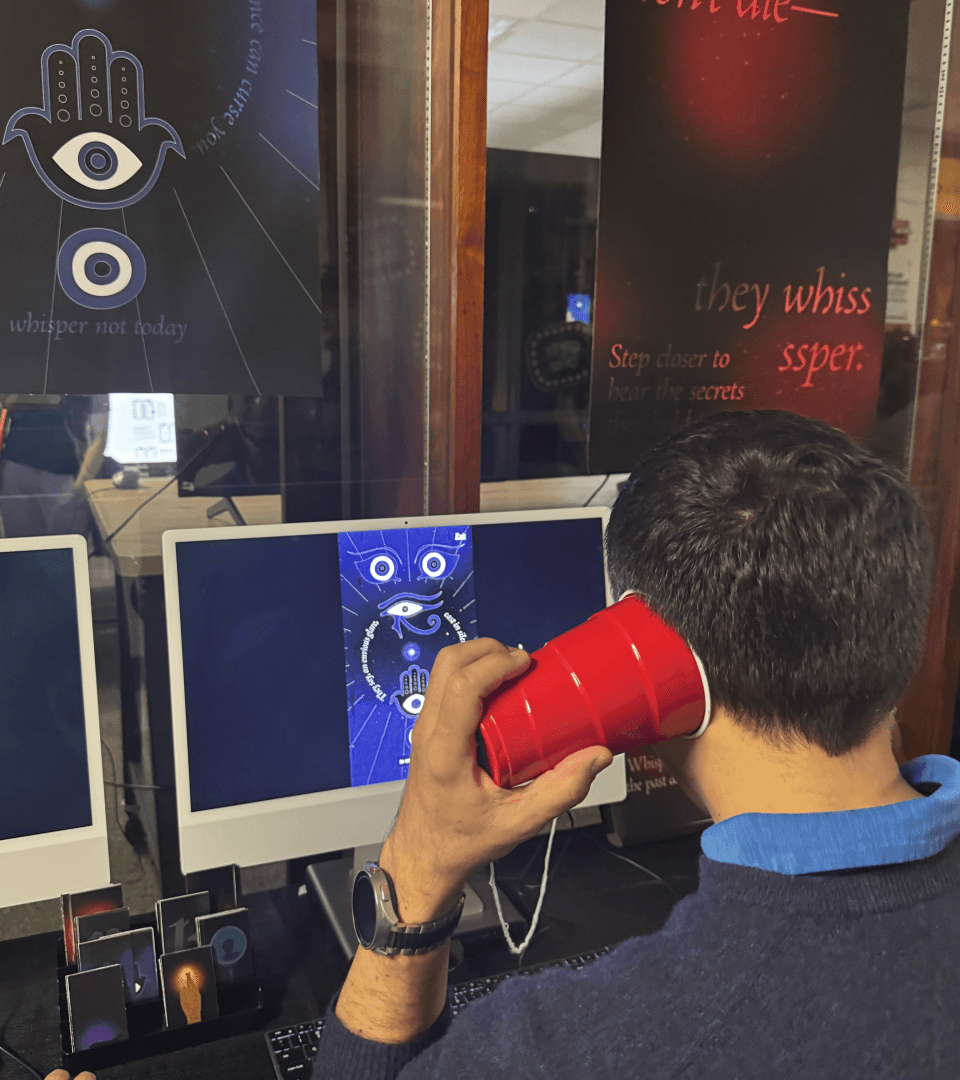
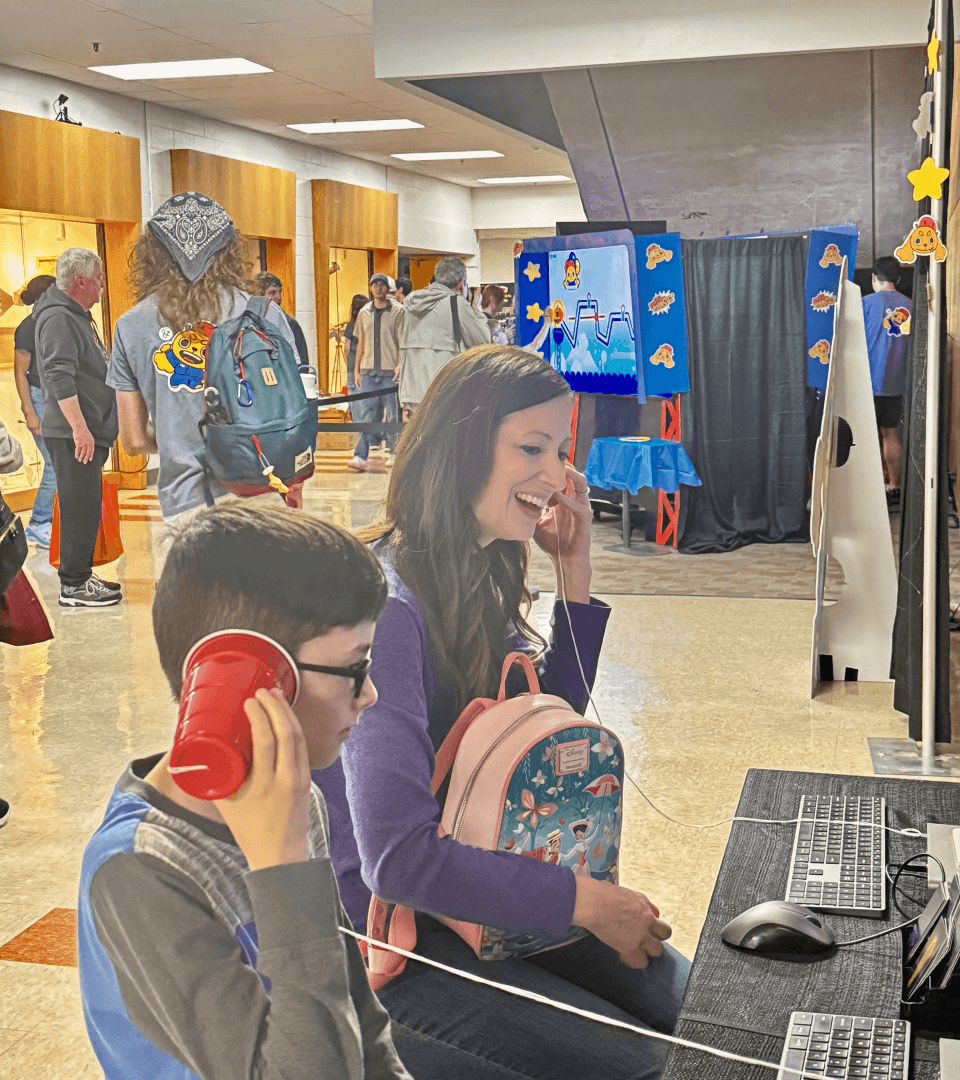
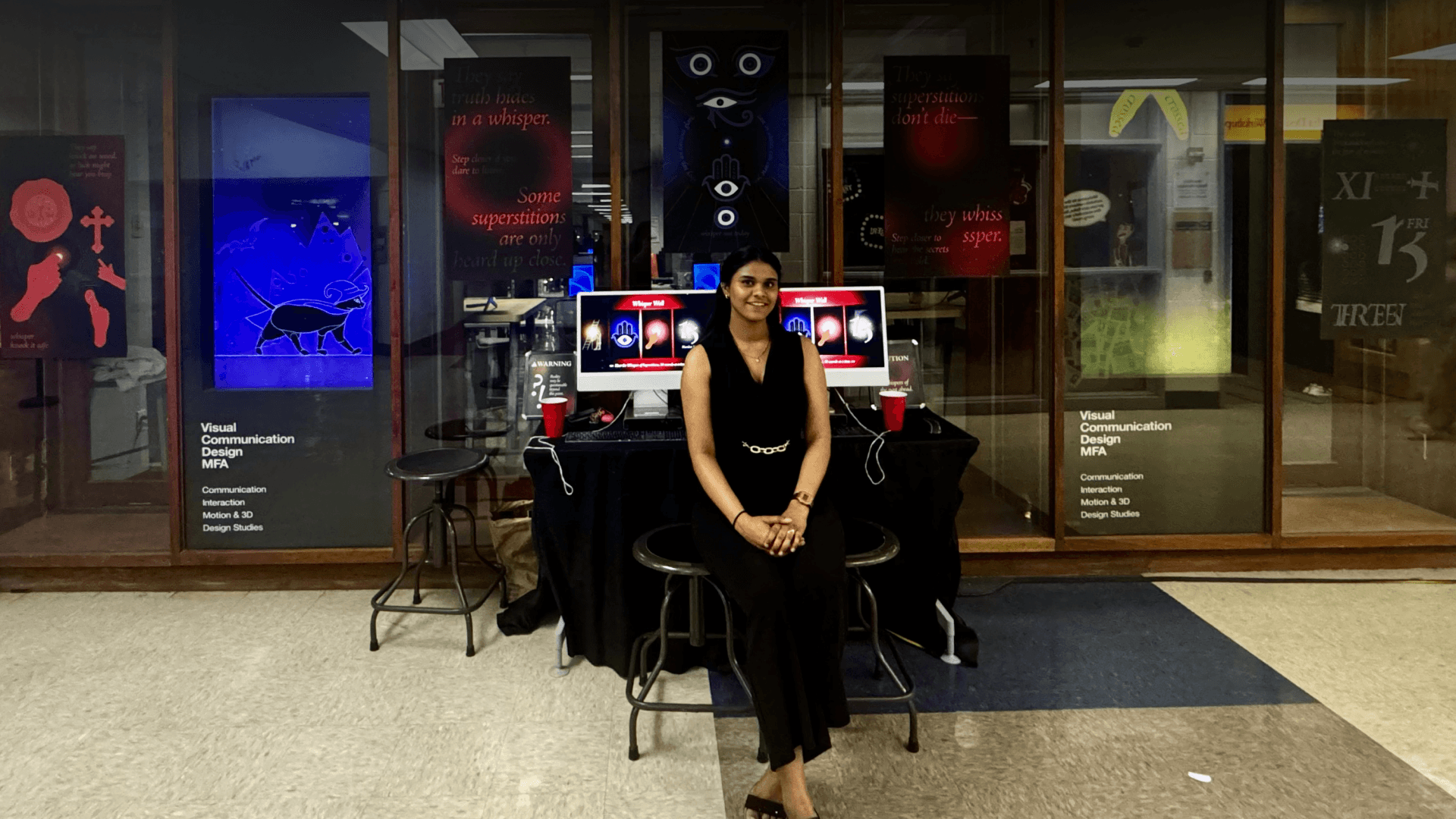
Whisper Wall is an immersive, sound-reactive experience that invites audiences to explore the mysterious world of superstitions through whisper-like audio via paper cups and symbolic, shadow-inspired visual storytelling.
We have encyclopedias on superstitions. Nothing that makes you feel them.
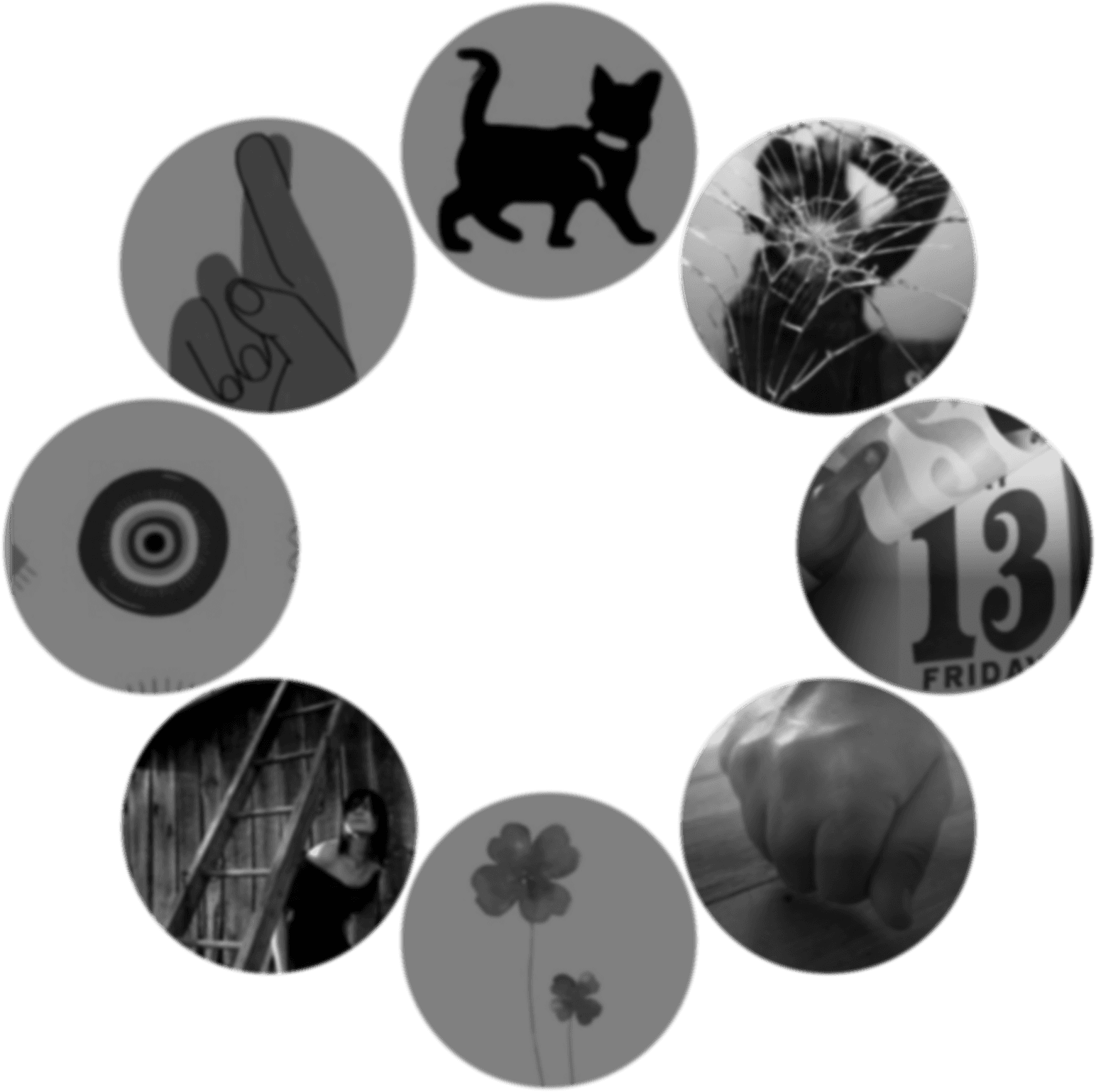
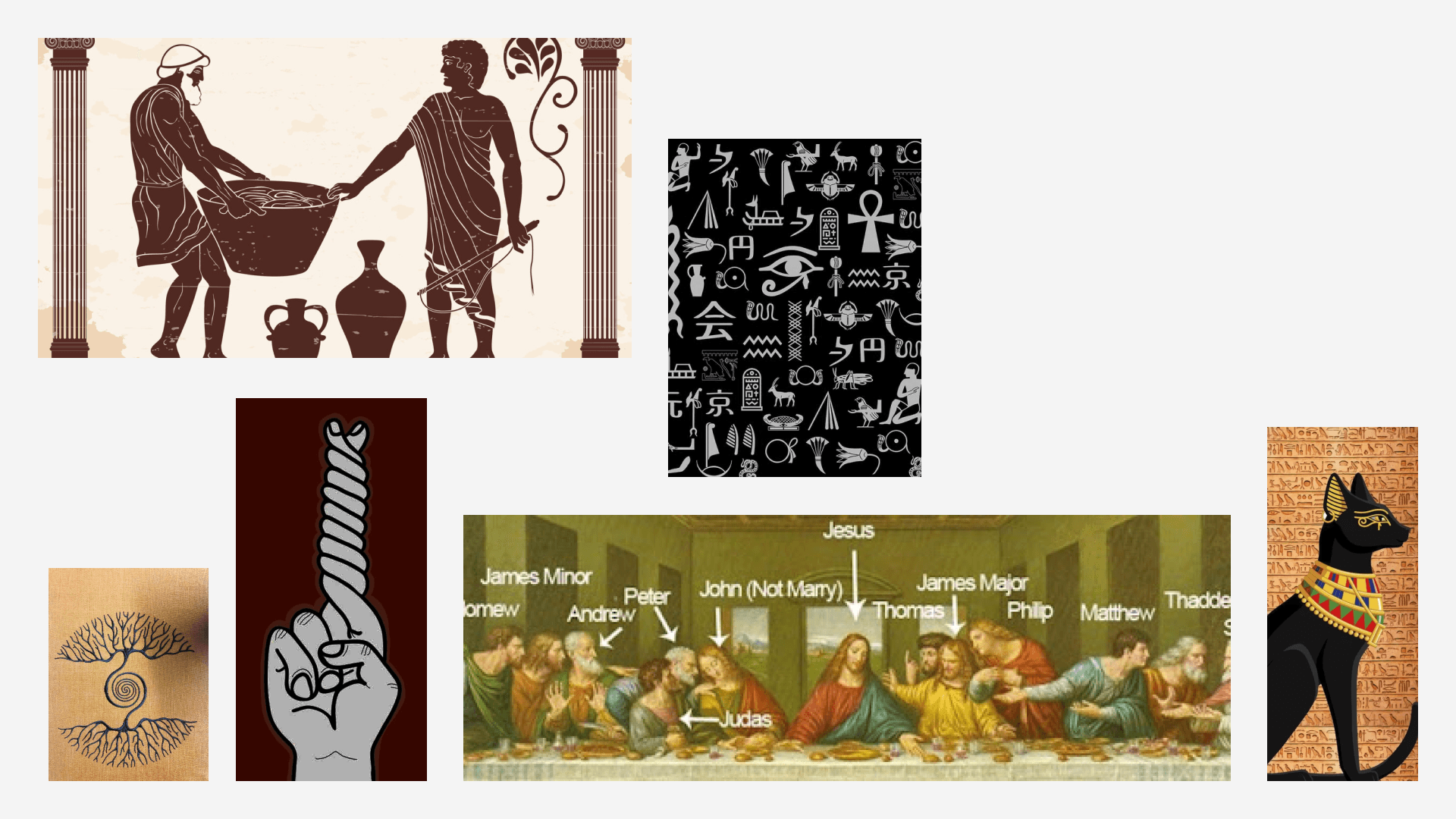
Superstitions are culturally inherited beliefs or practices that assign meaning to symbols, rituals, or actions—often without logic or scientific basis to navigate uncertainty, seek control, or invite luck.
In today’s rational world, they are often dismissed as irrational, yet they quietly shape behavior across cultures. Their origins are overlooked, and their emotional significance is rarely explored.
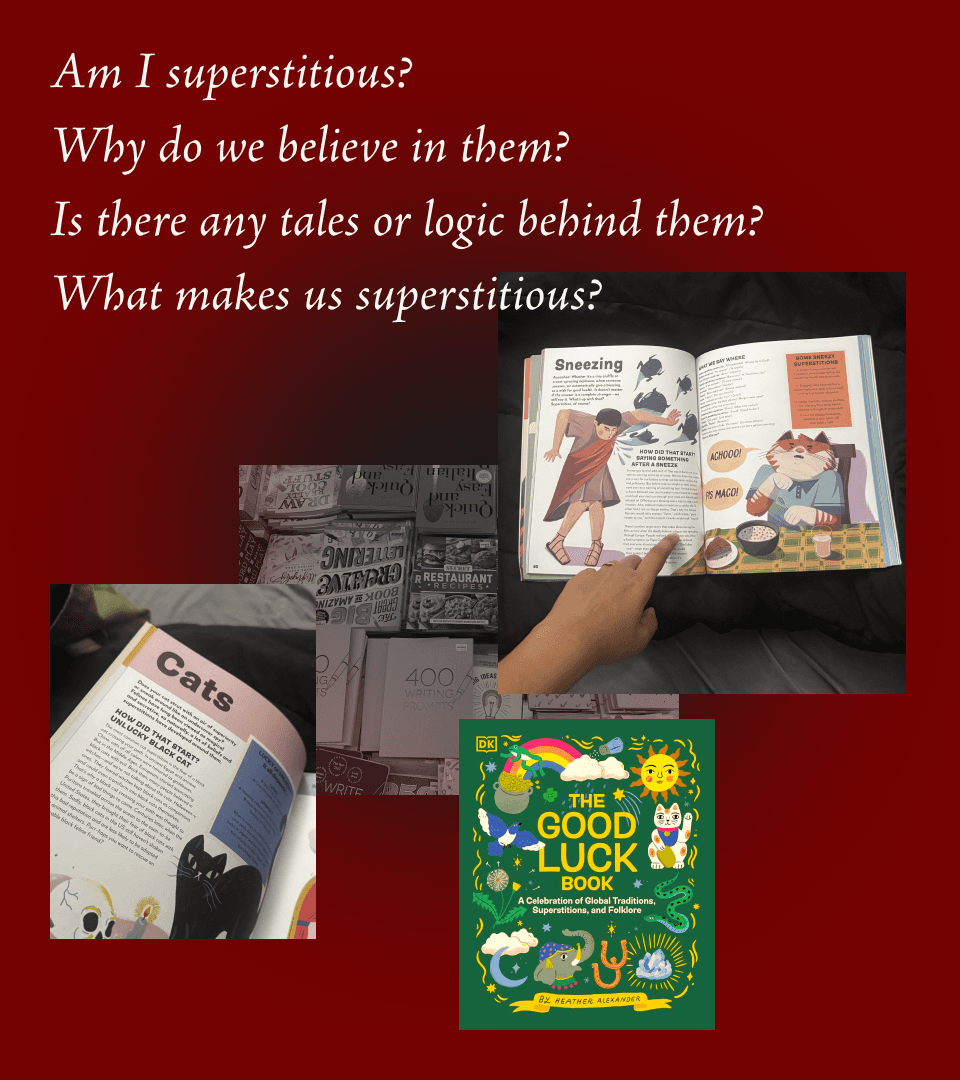
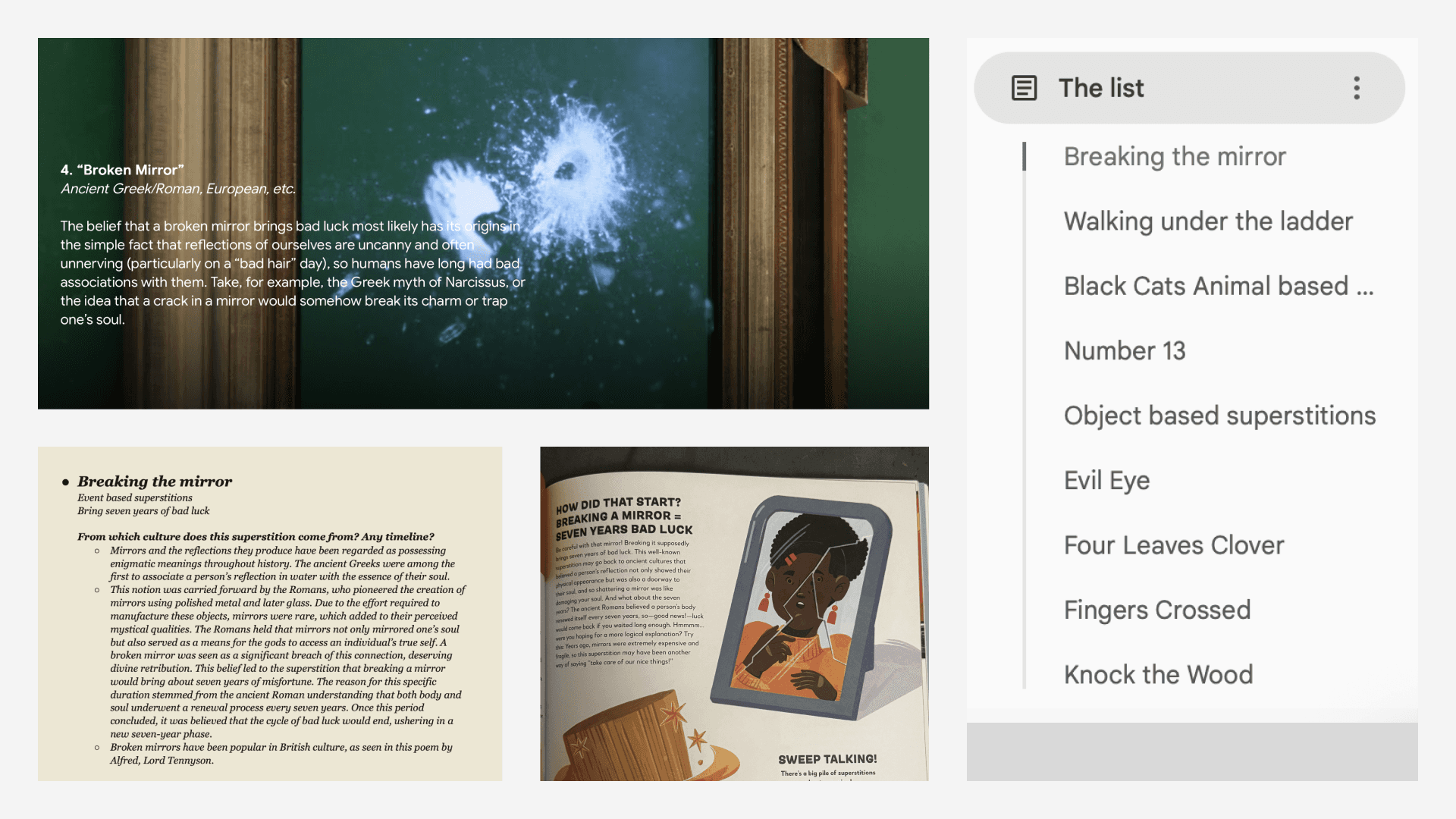
What began as a chance encounter with 'The Good Luck Book' by Heather Alexander grew into a deeper curiosity: why do invisible beliefs still hold such power?
Through superstitions, this project explores how design can move beyond explanation into a space for reflection, wonder, and connection.
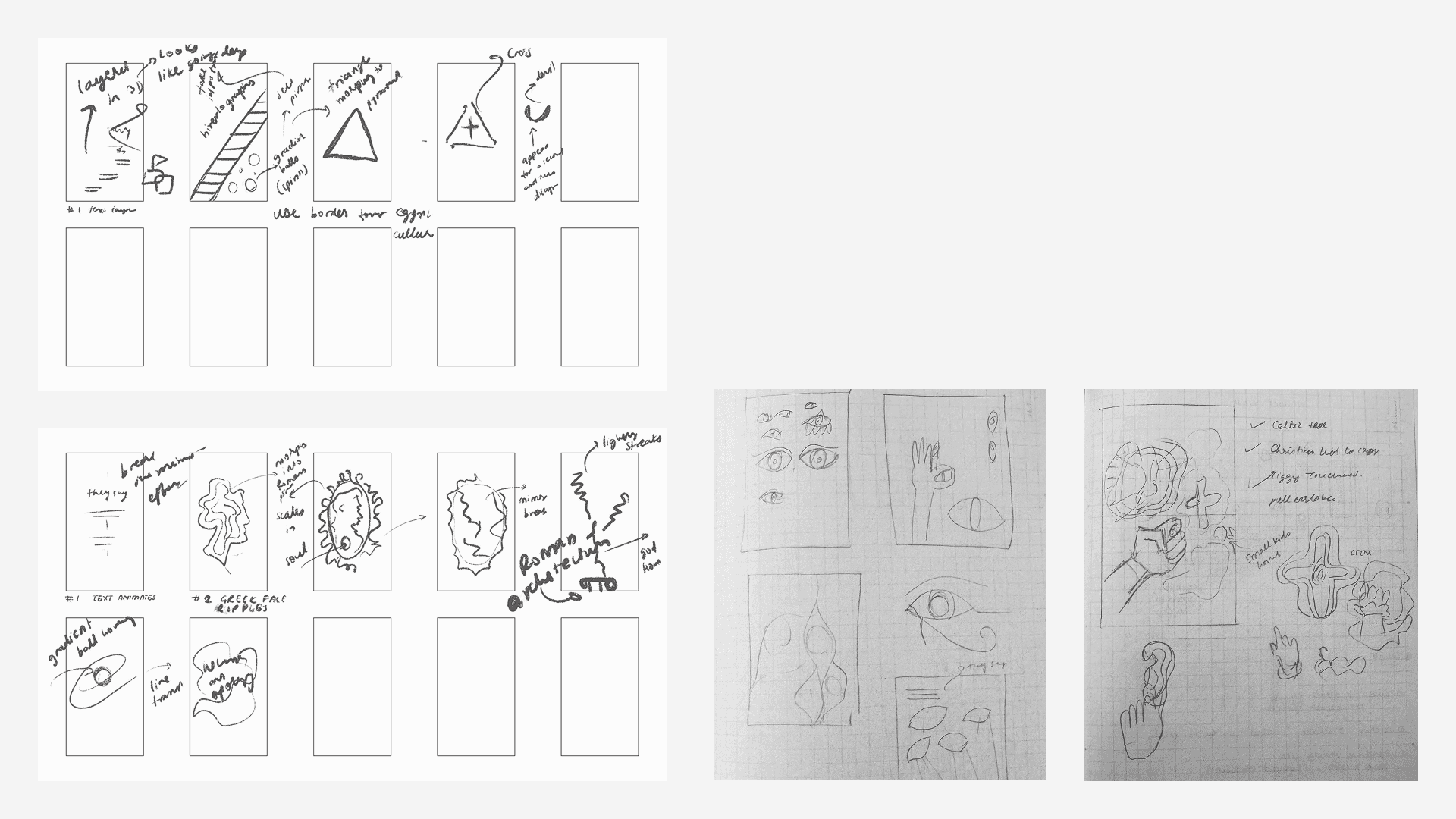
Each decision blends storytelling, interactivity, and cultural insight to bridge skepticism and curiosity—questioning what we believe, why, and whether it’s luck, fate, or fear.
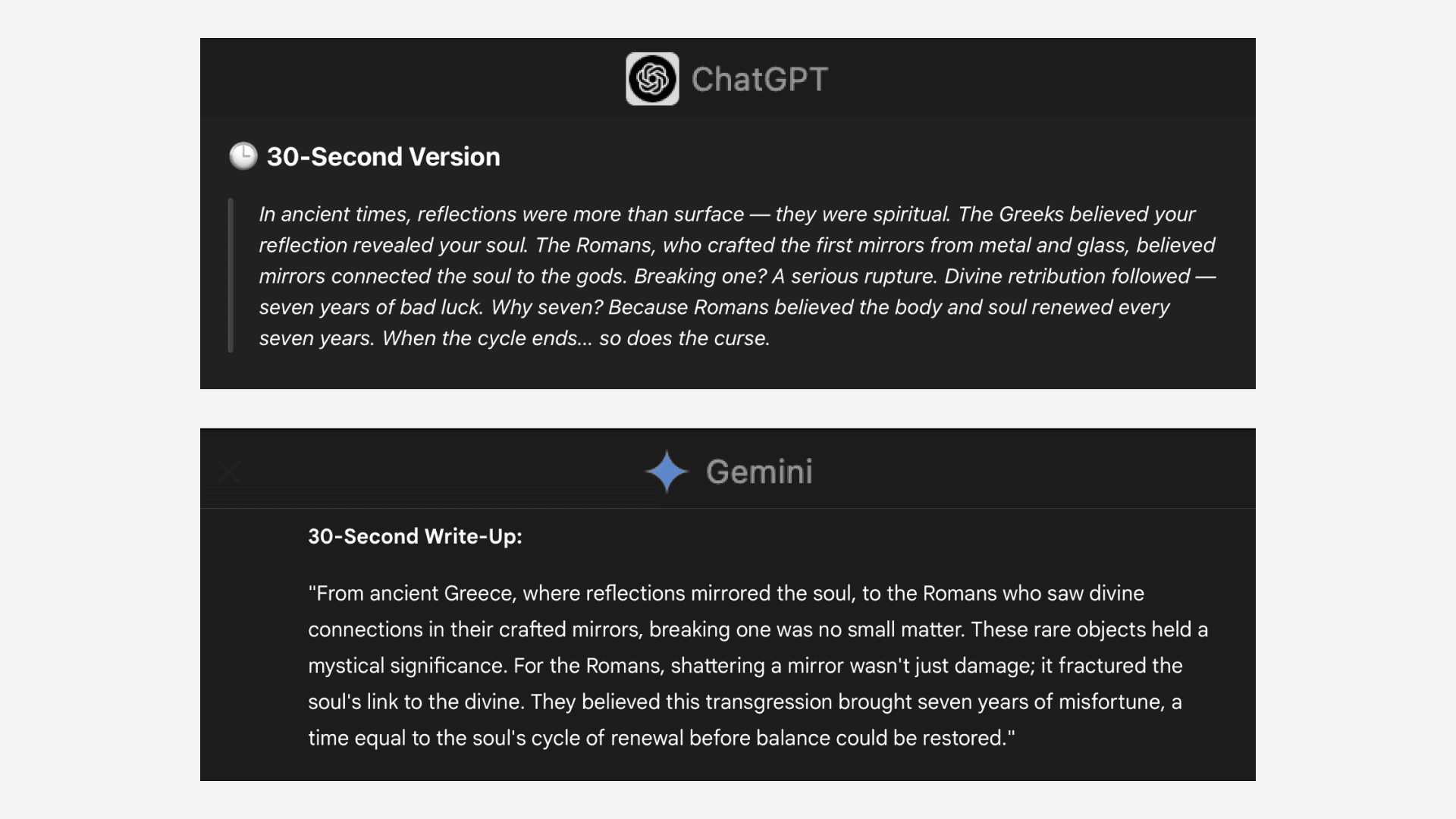
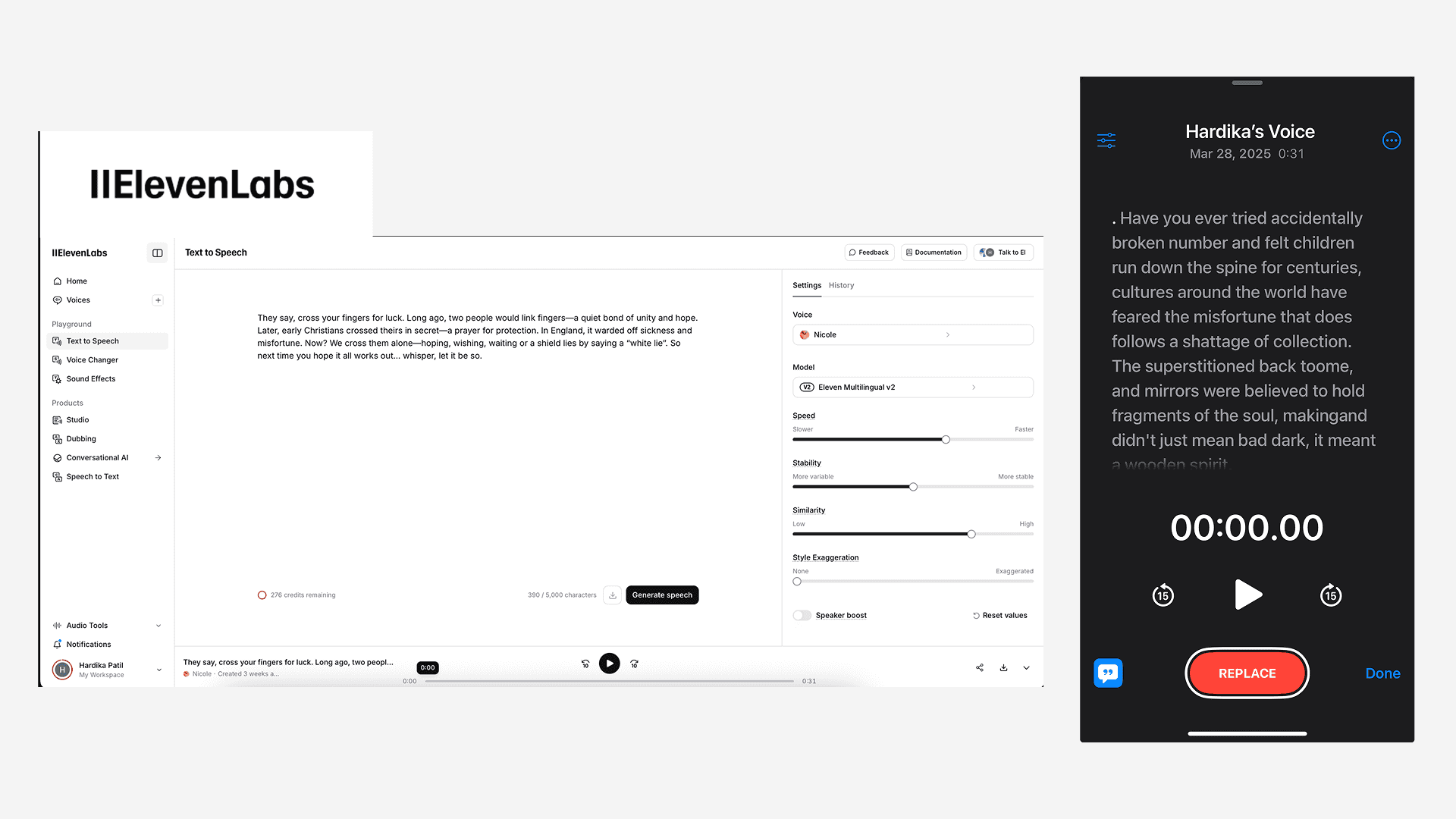
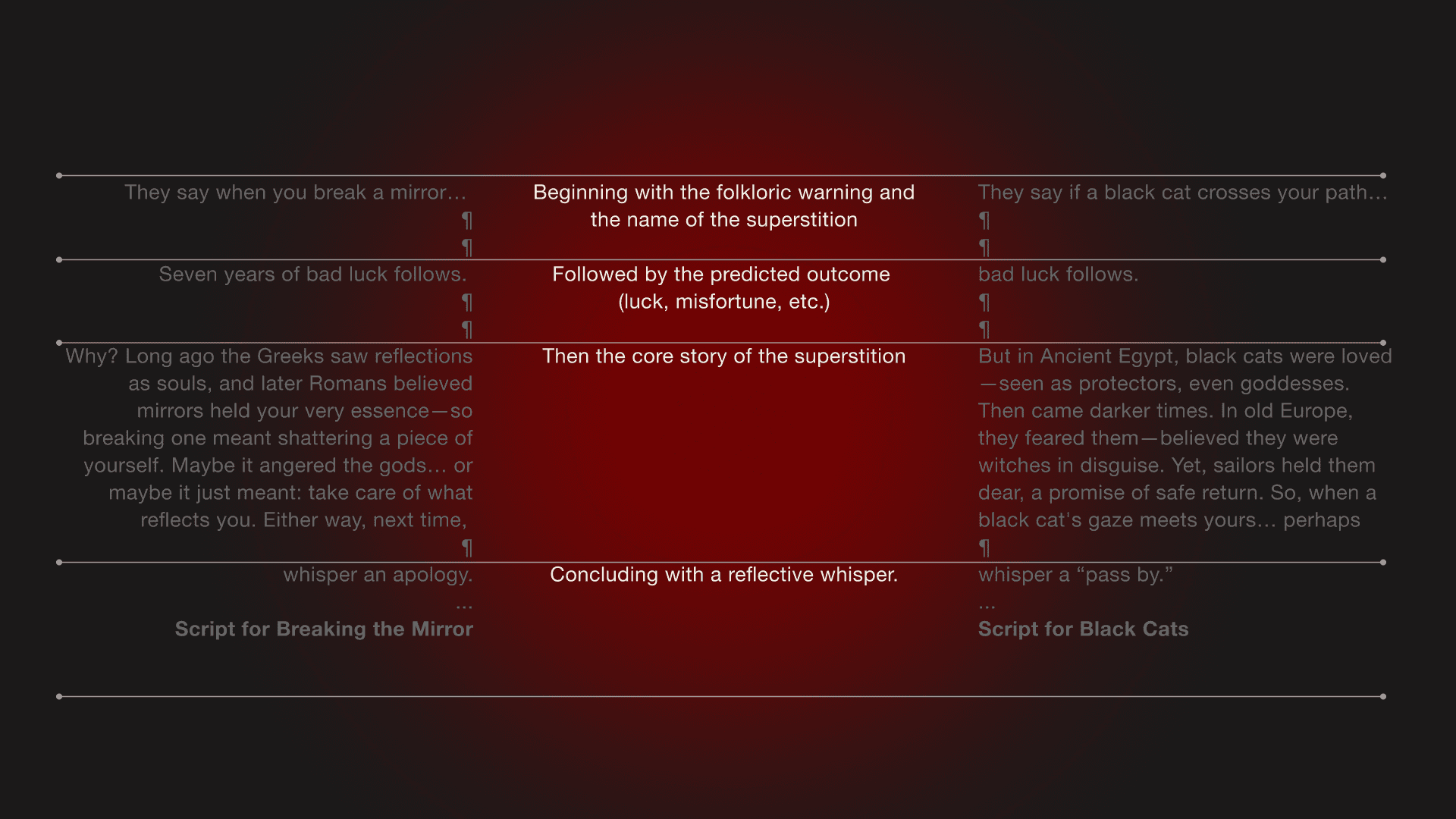
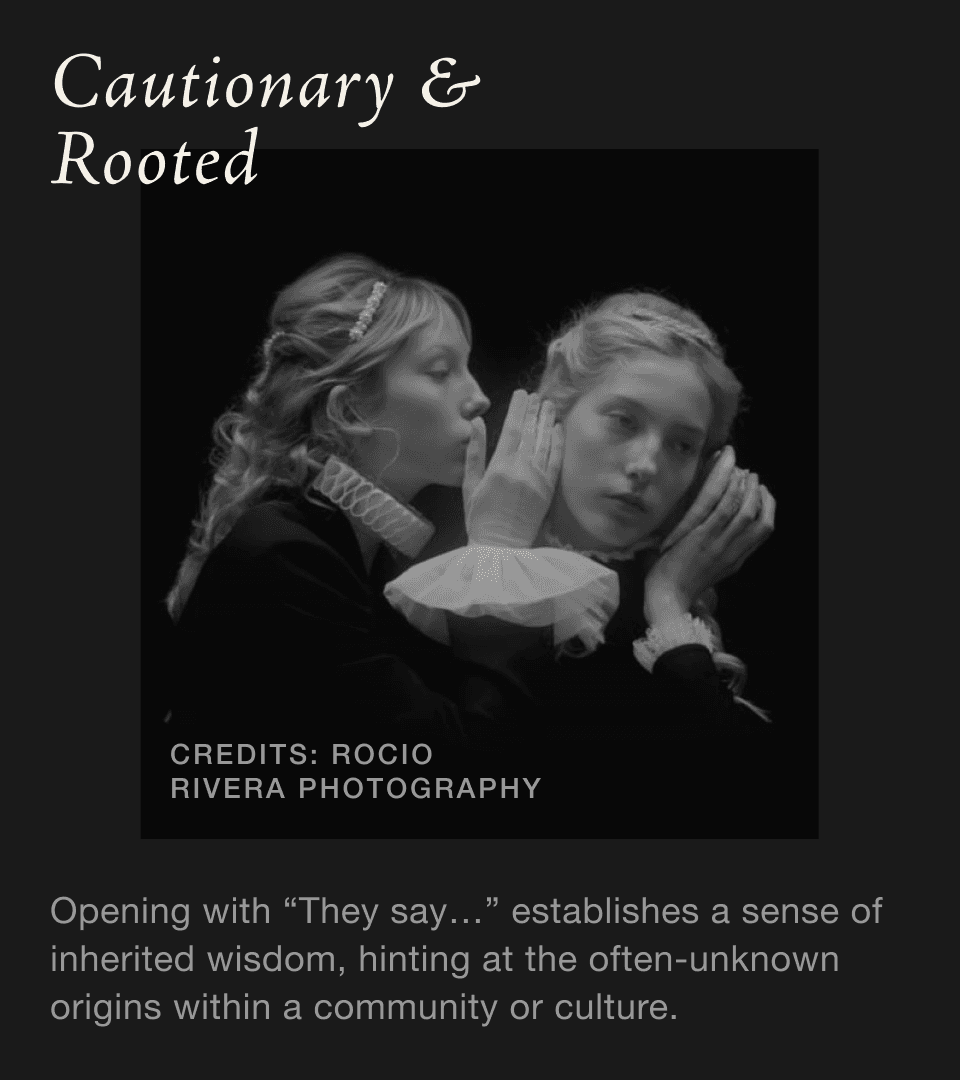
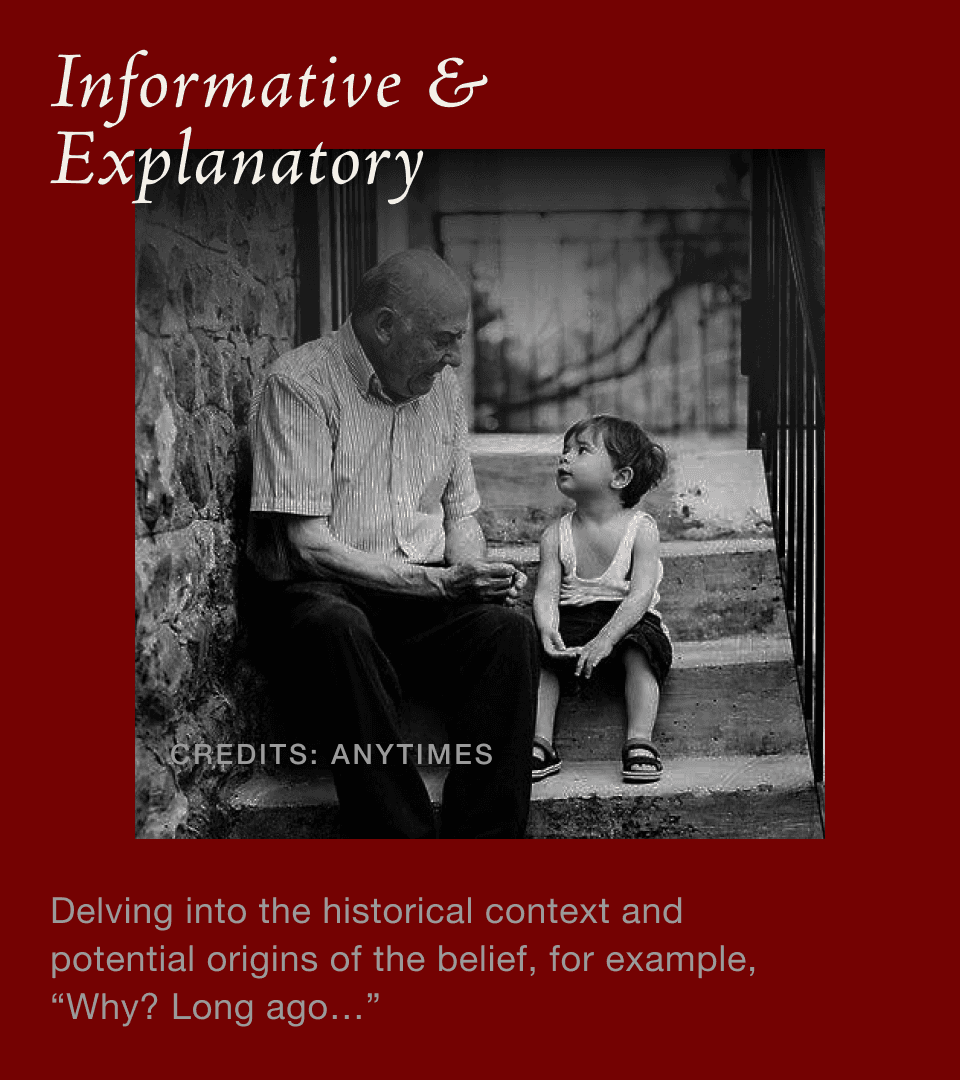
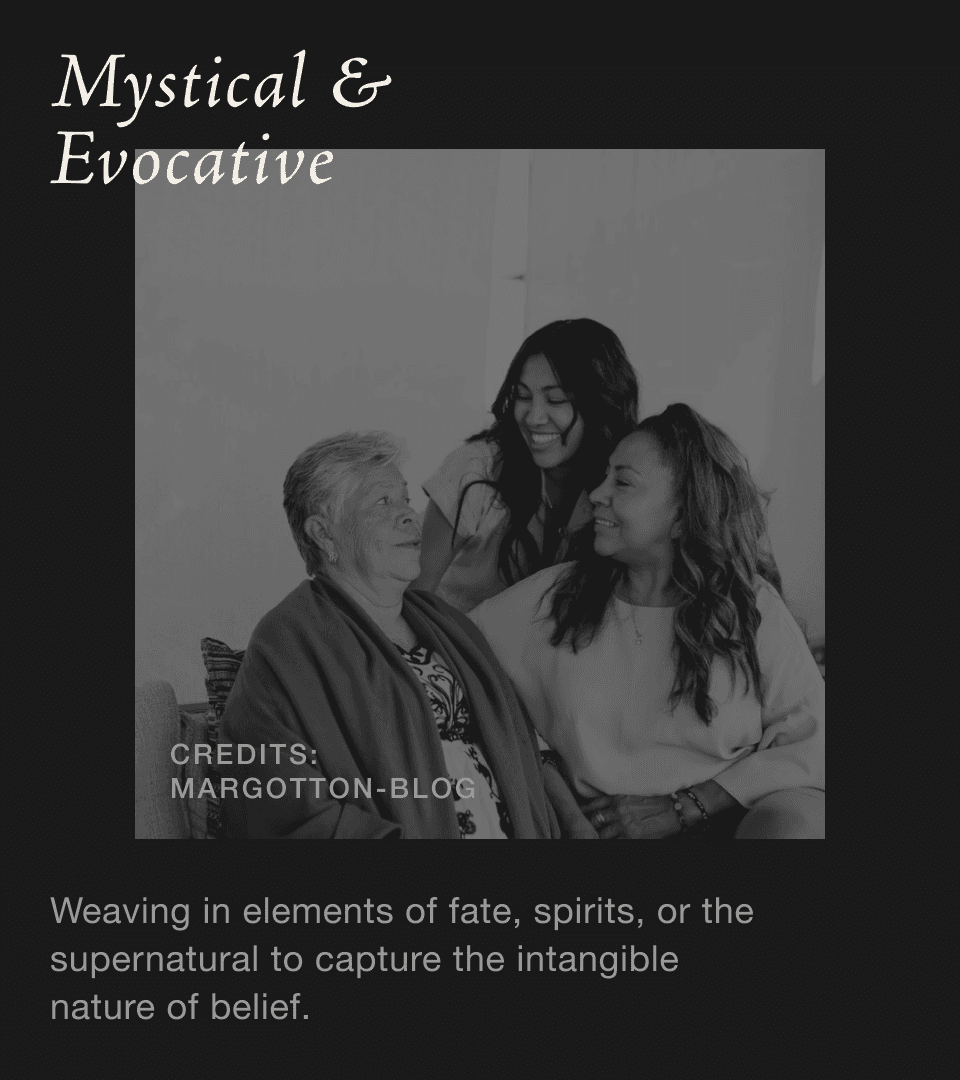
Superstitions don't live in encyclopedias — they live in stories told by someone who believes them. A warm, conversational tone mirrors oral tradition: not documented, but passed down.
Whisper Wall was designed for everyone. RIT's NTID community shaped a deliberate decision — subtitles weren't an accommodation added after, they were part of the design from the start. Every story, regardless of how it's heard, was meant to be felt by all.
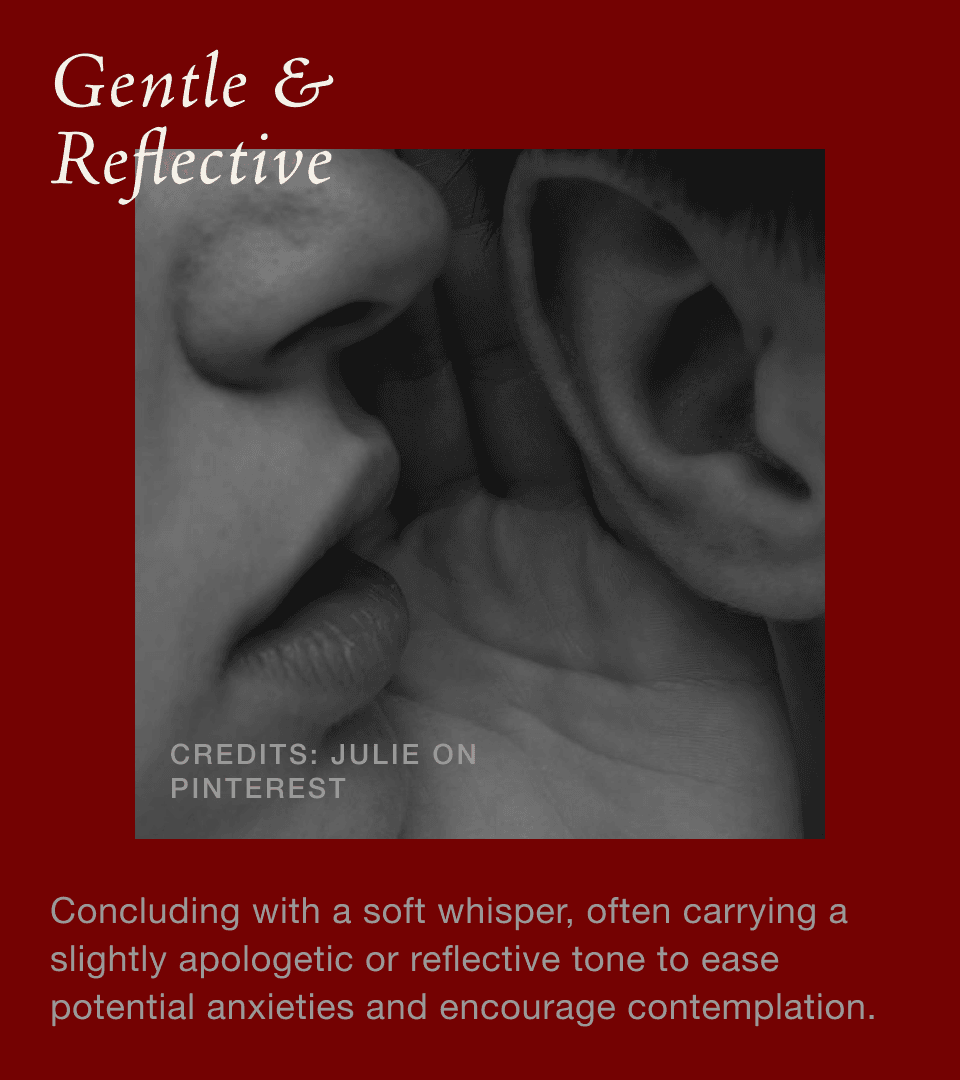
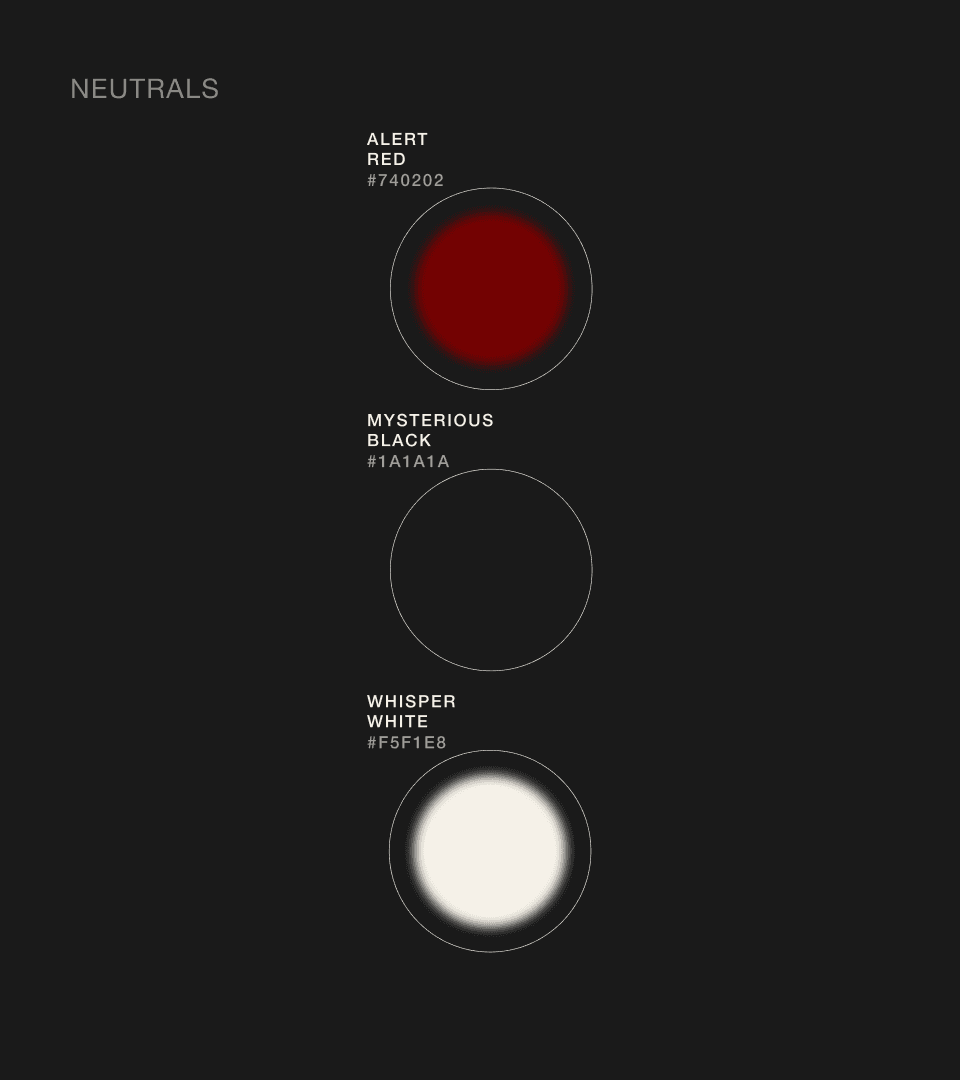
What makes Whisper Wall work is its simplicity and intimacy. It doesn’t lecture. It invites. The red paper cup is both playful and reverent.
The whisper is both nostalgic and unsettling.
It demonstrates how thoughtful storytelling, cultural insight,
and sensory interaction can turn overlooked traditions
into meaningful, memorable experiences